Glenn Close Recalls Cult Childhood In Oscar Speech
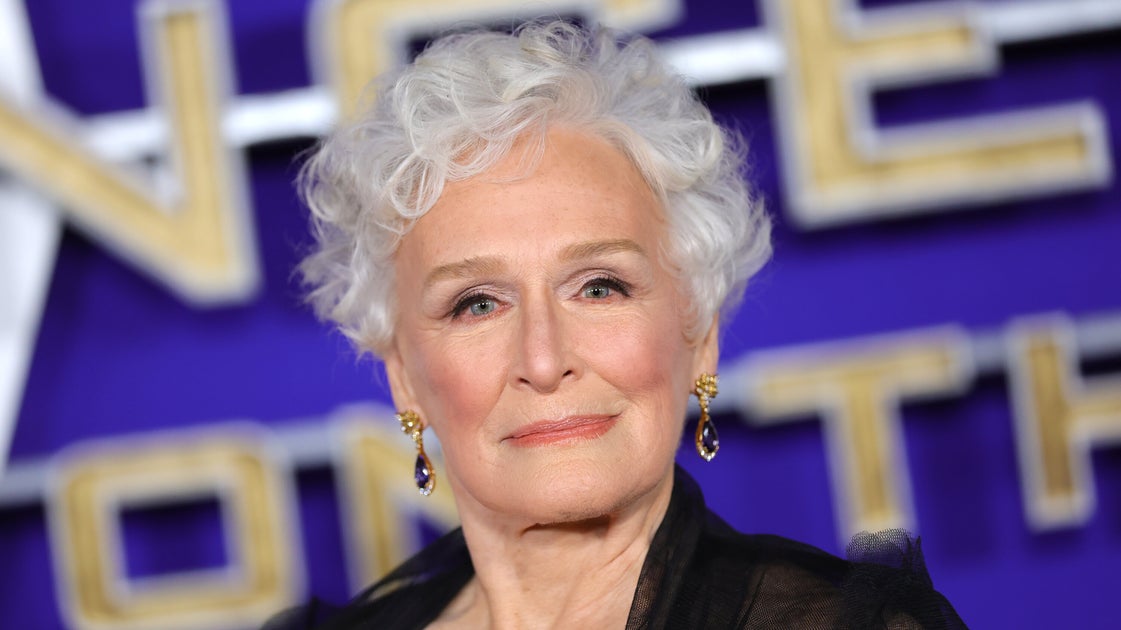
Glenn Close walked to the podium at the 17th Governors Awards on Sunday, Nov. 15, holding the oddest résumé in the ballroom: eight Academy Award nominations, more than four decades of celebrated screen work, and not a single competitive Oscar to show for any of it. The Academy handed her an Honorary Award instead. What she handed back was a speech that turned a career tribute into something closer to a survivor’s testimony about a childhood spent inside what she called “a restrictive cult.”
Close, 79, told the black-tie audience that she found it “very difficult for me to process this incredible honor,” because she has always carried what she described as “the epigenome of an outsider,” a phrase borrowed from biology to explain how inherited experience can lodge itself in a person. Everything that followed in her remarks flowed from that single idea: a girl who was trained to observe other people’s lives from a distance, and a woman who later built one of American acting’s most formidable careers out of exactly that vantage point.
Fifteen years under the thumb
“From the ages of 7 to 22, I was under the thumb of a restrictive cult,” Close said, naming the group her family followed, formerly known as Moral Re-Armament. She then recited the rules of her upbringing as a list of prohibitions, delivered in the flat cadence of remembered instruction: “Don’t look at yourself in the mirror. No flirting. Dress this way. Talk this way. Say it’s OK when your parents are routinely sent away from you for months on end.” The cumulative effect, she said, was a permanent remove from ordinary life: “It meant that I was always looking on the outside, I was always on the outside looking in.”
The movement she described began as the Oxford Group, an evangelical fellowship built by the American minister Frank Buchman that adopted the name Moral Re-Armament in 1938 and later rebranded as Initiatives of Change in 2001. It preached four absolute standards (honesty, purity, unselfishness and love) and required members to confess their failings openly, a practice that critics have long argued could become a tool of control rather than of conscience. Close’s father, a surgeon, moved the family from Connecticut to Switzerland to be near Buchman, a decision that placed his daughter inside the organization’s discipline for the whole of her adolescence.
The freshman who walked straight into a theater
The turn came in 1970. “I found the strength to leave the cult and enrolled as a 22-year-old freshman at the College of William and Mary,” Close said. She wasted no time on orientation. She “went straight to the theater department, auditioned, and ended up getting cast as Olivia in Shakespeare’s 12th Night,” a role that gave her the first legitimate outlet for the emotional vocabulary she had spent fifteen years suppressing.
From Williamsburg the trajectory was steep. Close became one of the most decorated stage actors of her generation, collecting three Tony Awards, including one for the musical Sunset Boulevard, and three Emmy Awards, then crossed into film with a run of roles that made her name synonymous with unnerving intelligence: The World According to Garp, The Big Chill, The Natural, Fatal Attraction, Dangerous Liaisons, 101 Dalmatians, Albert Nobbs and, eventually, The Wife. Each of the first five of those films brought an Oscar nomination. So did Albert Nobbs, The Wife and Hillbilly Elegy, eight bids in total across four decades without a single win until the Academy’s board of governors decided to stop making her wait.
Eight nominations and no anxiety about winning
If the drought ever stung, Close was careful not to let it show from the podium. Because she had grown up convinced she was fundamentally on the outside, she said, she “never worried about whether I was going to win or not, though some years I thought I might have a chance.” The formulation carried a quiet rebuke to the industry’s fixation on statuettes: the person in the room with the longest losing record was also the least troubled by it.
That instinct toward belonging and exclusion is precisely why the speech travelled so far beyond the ballroom. Outsider stories endure because most people recognize the gap between the room they occupy and the room they believe they deserve. The same pull shapes public life as surely as it shapes cinema, influencing how audiences read a ceremony like this one and how citizens approach institutions at large, down to the practical matter of when polls open and close on election day.
Annie, Mark and Rory
Close’s composure cracked near the end, when she turned to her only child, Annie Starke. “There’s one person who never asked to be the daughter of an actor, a celebrity, but who has navigated those challenging waters with wisdom, humor, ferocity and love,” she said. “My daughter, Annie, who when she was three, looked up at me and said, ‘I want you. I want all of you.’”
The recollection opened onto an admission that many working parents will recognize. “Being a working single mother, I knew exactly what she meant, but I also knew it was something I couldn’t always promise her,” Close said, before dedicating the award to Starke, her son-in-law Mark and her grandson Rory. “You are my heart and soul. I share this with you, my darling girl,” she added. “The pain of leaving is always relieved by the joy of coming home. I love you beyond measure. What I do will always be for us.”
A wound that does not close
The Governors Award was presented with her Dangerous Liaisons co-star and Broadway sparring partner John Malkovich looking on. Close has described her years in Moral Re-Armament before, telling The Guardian in 2025 that she endured “a kind of psychological abuse couched in underlying misogyny,” a pattern she suggested was embedded in the movement’s expectations of women and children. Asked about the lasting effect, she did not reach for metaphor. “It never leaves you,” she said, tapping her chest. “It’s insane that what happens at a certain time in your childhood is right here.”
The honorary statuette is not a competitive award, and it does not rewrite the record books of those eight nominated performances. What it does do, in the Academy’s long tradition of honoring its most nominated and least rewarded, is reframe a career that has often been described in terms of what it lacked. Close’s own framing is different: a childhood spent watching through glass, a departure at 22, and a late-November night when the room full of people finally turned to look back at her.
Source Reference (huffpost.com): Glenn Close Recalls Growing Up In A ‘Restrictive Cult’ During Emotional Honorary Oscar Speech
Frequently Asked Questions (FAQ)
What award did Glenn Close receive at the 17th Governors Awards?
Close received an Academy Honorary Award, an honor voted by the Academy's board of governors and presented at the annual Governors Awards ceremony, rather than at the televised Oscars. The award came after eight competitive Oscar nominations without a win.
What cult was Glenn Close part of as a child?
She was raised within Moral Re-Armament, a movement founded by the American minister Frank Buchman and known earlier as the Oxford Group. It was later renamed Initiatives of Change in 2001. Close said she was under the group's control from age 7 until she left at 22 in 1970.
How did Glenn Close start her acting career?
After leaving the group in 1970, she enrolled as a 22-year-old freshman at the College of William and Mary in Virginia, went directly to the theater department to audition, and was cast as Olivia in Shakespeare's Twelfth Night.
Who did Glenn Close dedicate her honorary Oscar to?
She dedicated the award to her only daughter, Annie Starke, as well as to Starke's husband Mark and her grandson Rory, describing her daughter as her heart and soul.