Suriname’s Dutch-Born Brigade Eyes World Cup Payback
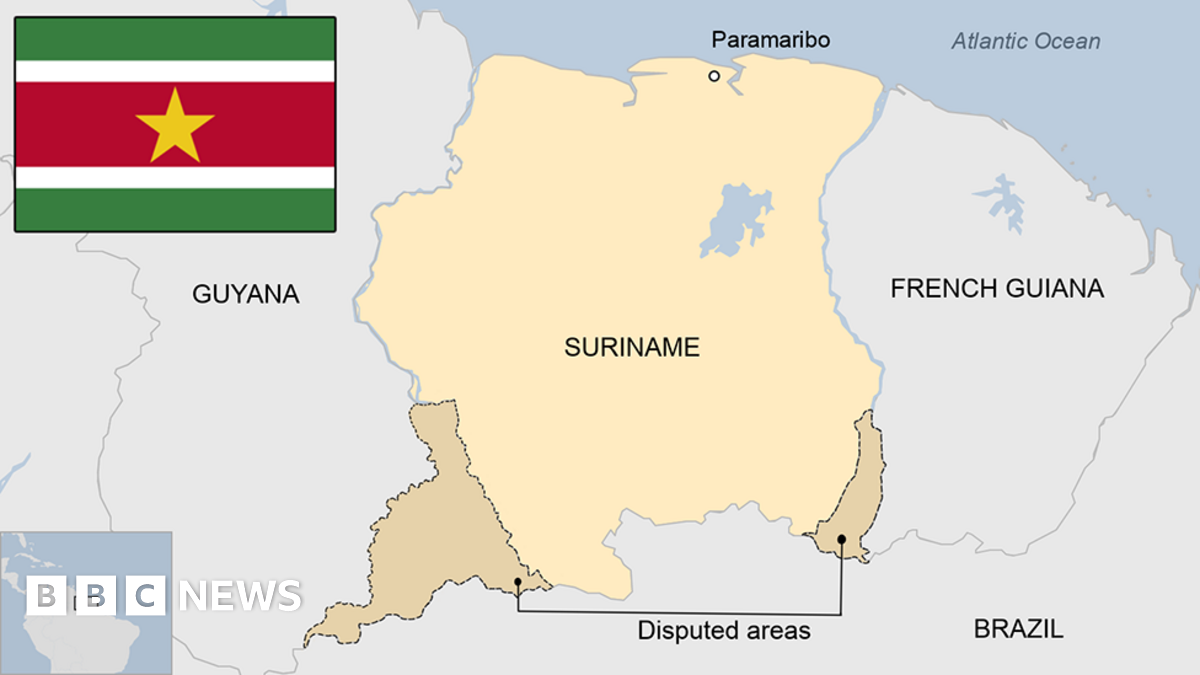
Suriname have never played at a World Cup finals. That single sentence has hung over the country’s football federation for generations, and it may finally be about to expire. With FIFA having expanded the 2026 tournament to 48 teams and CONCACAF holding six guaranteed places, three of which pass automatically to hosts the United States, Mexico and Canada, the region’s other nations are competing for three direct tickets plus two intercontinental playoff berths. For a country of roughly 630,000 people on the northeastern shoulder of South America, the arithmetic has never looked so generous.
The squad assembled to chase those places is, in a very literal sense, Dutch. Goalkeepers, defenders, midfielders and forwards who learned the game in academies in Rotterdam, Amsterdam, Utrecht and Eindhoven now pull on a Suriname shirt, many of them the children and grandchildren of families who left the former colony for the Netherlands in the decades around independence in 1975. The project has a pointed nickname in Paramaribo and in the Surinamese diaspora: payback time.
Why 2026 represents the best chance yet
The mathematics of the expanded field do most of the explaining. In previous cycles CONCACAF’s three and a half places were effectively reserved for Mexico and the United States, with Costa Rica, Honduras and Trinidad and Tobago scrapping over the scraps. The 2026 format removes the three host nations from the qualification equation entirely and leaves three outright places plus two playoff routes open to everyone else, from Panama and Jamaica down to nations that have never come close. A single strong group campaign is now enough to reach the greatest stage in sport.
Suriname were placed in Group A of the final round alongside Panama, Guatemala and El Salvador. The format is unforgiving but simple: three groups of four, six matches home and away, with each group winner qualifying directly for the World Cup and each runner-up dropping into the playoff route. There is no margin for a slow start, and there is equally no requirement to beat the continental elite over a long campaign.
A debt written into the colonial era
The idea of a Surinamese national team stocked with Dutch professionals is not a novelty, but a homecoming with an edge. For the best part of fifty years the Netherlands benefited from Surinamese footballing blood without ever having to answer for it. Ruud Gullit, Frank Rijkaard, Edgar Davids, Clarence Seedorf, Patrick Kluivert, Jimmy Floyd Hasselbaink and Aron Winter all trace their roots to the former colony, and all of them wore the orange of the Netherlands rather than the green, white and red of the land their families came from.
The current head coach fits the same pattern. Stanley Menzo, born in Paramaribo, made his name as an Ajax goalkeeper and went to the 1990 World Cup with the Netherlands. He now works for the country of his birth, and he is candid about what the recruitment drive represents. The Dutch system took the talent, developed it, and rarely looked back. Suriname, with a fraction of the budget, is now cashing in on that development.
The FIFA rule that unlocked the door
None of this would be possible without a change in the regulations governing national eligibility. Under Article 9 of FIFA’s application regulations, a player who has represented one association at youth level may switch to another provided he played no more than three competitive senior matches for the first association before turning 21, has never appeared at a World Cup or a continental finals, and holds the nationality of the new association. That clause, refined in 2020, turned dozens of Dutch-born professionals with Surinamese passports from ineligible to available overnight.
The recruitment was neither automatic nor frictionless. Players had to weigh international ambition against the risk of injury on long-haul flights, clubs had to be persuaded to release them, and the federation had to build a scouting operation capable of tracking dual-national footballers across several European leagues simultaneously.
The names carrying the shirt
Tjaronn Chery is the creative reference point, a well-travelled playmaker who has played in England and Turkey and who gives Suriname a top-level set-piece and passing threat. Sheraldo Becker, who made his reputation in the Bundesliga with Union Berlin and now plays in Spain, supplies the pace in behind that turns defensive discipline into counter-attacking danger. Ridgeciano Haps brings Serie A and Eredivisie experience at left-back, Justin Lonwijk and Damil Dankerlui add energy in midfield and wide areas, Gyrano Kerk offers direct running, and Kelvin Leerdam and Shaquille Pinas give the back line a settled, experienced spine. Goalkeeper Etienne Vaessen, a regular in the Dutch top flight, anchors the last line.
The local core and the domestic game
Suriname are not simply importing a squad. A domestic league restructured with CONCACAF support supplies a small but meaningful local contingent, and the federation has been careful to keep home-based players inside the camp environment. That balance matters politically as well as sportingly, because a team made up entirely of European-born professionals would risk estranging the supporters who fill the stands in Paramaribo.
Menzo’s Dutch blueprint
On the pitch, the approach is recognisably Dutch: a back four, a holding midfielder asked to receive under pressure, and wide forwards who stay high and stretch the pitch. Suriname press in short bursts rather than for ninety minutes, largely because the squad assembles late and trains together only a handful of times before each window. Set pieces, where Chery and Becker are both dangerous, have become a deliberate equaliser against better-resourced opponents.
The tactical gamble is that a possession-based structure can survive the heat, humidity and travel of a CONCACAF campaign. Away matches in Central America present hostile crowds, difficult pitches and long journeys, and Suriname’s own home fixtures require visiting teams to fly into a country with limited direct connections from the region’s football centres.
The obstacles that remain
Money is the persistent constraint. The federation operates on a fraction of the budgets available to Panama or Costa Rica, travel costs are punishing for an isolated country bordering Brazil, Guyana and French Guiana, and charter flights for squad gatherings have to be negotiated window by window. European clubs, meanwhile, are rarely enthusiastic about releasing players for fixtures that end with an eight-hour return journey two days before a league match.
Attention is already building abroad. Dutch and Caribbean broadcasters carry the matches, supporters in Rotterdam, Amsterdam and The Hague plan their weeks around kick-offs, and regional audiences have grown used to detailed service journalism around fixtures, the same appetite for live stream and TV guide information that surrounds a West Indies one-day international.
What qualification would actually mean
For Suriname, reaching 2026 would be about far more than ninety minutes of football. It would deliver the largest financial windfall in the federation’s history, unlock investment in pitches and youth coaching, and give the domestic league a marketing platform it has never possessed. It would also redraw the map of Caribbean and South American football, proving that a small nation with a diaspora and a smart eligibility strategy can compete with countries many times its size.
For the players themselves, the emotional pull is harder to quantify. Many grew up watching the Netherlands at major tournaments while hearing Surinamese spoken at home. Wearing the shirt of their parents’ country, in a World Cup, would settle a long-running argument about which footballing inheritance they belonged to. The remaining group matches will decide whether that story ends in celebration or in another four-year wait.
Source Reference (france24.com): Payback time: how Dutch players could power Suriname to the World Cup
Frequently Asked Questions (FAQ)
Has Suriname ever qualified for a FIFA World Cup?
No. Suriname have never reached a World Cup finals. They made their CONCACAF Gold Cup debut in 2021 but have not yet appeared at football's biggest tournament.
Why does Suriname's squad include so many Dutch-born players?
Suriname was a Dutch colony until 1975, and hundreds of thousands of Surinamese people and their descendants live in the Netherlands. FIFA eligibility rules allow players capped at youth level by one association to switch to another under strict conditions, which opened the door for dual-national professionals.
Who coaches the Suriname national team?
Stanley Menzo, a former Ajax and Netherlands goalkeeper who was born in Paramaribo and played at the 1990 World Cup.
How many CONCACAF teams qualify for the 2026 World Cup?
CONCACAF holds six guaranteed places. Three go automatically to hosts the United States, Mexico and Canada, leaving three direct qualification slots for the rest of the region, plus two berths in the intercontinental playoffs.
Which group are Suriname in for the final round of qualifying?
Suriname were drawn in Group A alongside Panama, Guatemala and El Salvador. Each team plays six matches home and away, with the group winner qualifying directly and the runner-up entering the playoff route.