Abdul Carter: Giants’ Pass Rush Leaves Me Disgusted
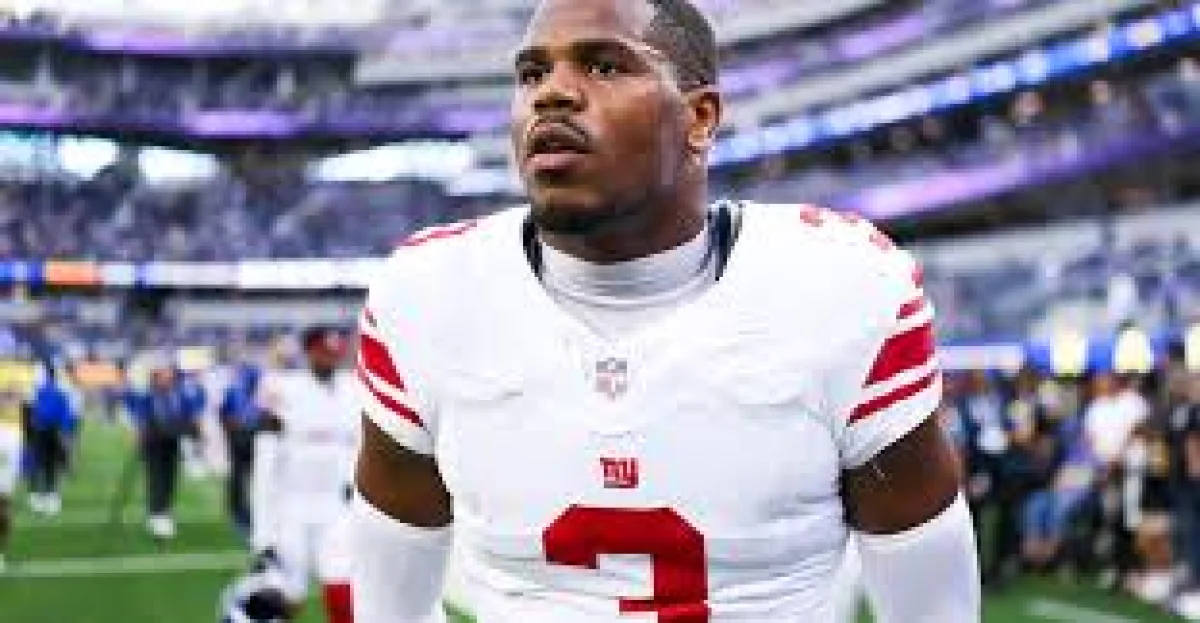
Three games into a season that was supposed to establish the New York Giants’ defensive identity, Abdul Carter has delivered an assessment that cuts straight through the usual locker room diplomacy. The young edge rusher said this week that he is disgusted by the state of the team’s pass rush, a frustration made considerably sharper by the season-ending knee injury that has removed Brian Burns from the lineup for the remainder of the year.
Burns is done for 2025 with a torn ACL and a damaged meniscus, a combination that strips the Giants of their most reliable source of edge pressure. Carter, who has recorded a single sack across the opening three contests, made no effort to dress up the picture or hide his irritation.
Carter Refuses to Soften the Message
Speaking during the week, Carter addressed the situation directly rather than retreating into the standard talking points about improvement and process. “Honestly, seeing where we are with our pass rush, I’m honestly disgusted at it, but at the same time, we can’t let it discourage us,” he said.
That single sentence captures the central tension inside the building. The urgency is unmistakable, but the production has not followed. Carter’s one sack is a modest return for a player drafted third overall out of Penn State, and the unit around him has not consistently forced opposing quarterbacks into hurried throws or off-platform decisions.
In a league where pressure frequently determines outcomes as much as coverage integrity does, this does not read like a routine slow start. It reads like a structural problem that opponents have already noticed on film.
Burns Injury Changes the Entire Equation
The loss of Burns compounds everything. Acquired from Carolina in March 2024 and subsequently signed to a long-term extension, Burns arrived in East Rutherford as the proven, game-wrecking presence the Giants had lacked on the edge. Carter described him as the player the defense could always lean on because he does everything right, practicing hard and playing hard in equal measure.
Carter also noted that Burns demonstrated his character by pushing through pain before the injury finally ended his season, a detail that speaks to the professionalism the Giants will now have to replace collectively rather than individually.
The damage extends well beyond the box score. Burns gave the coaching staff a dependable way to win one-on-one matchups on the perimeter, and his presence forced opposing offenses to allocate help in his direction. Remove that threat, and the margin for error shrinks for every other defender on the field. The road back from a significant setback like this is rarely a straight line, a reality familiar to anyone who has tracked Jason Priestley’s remarkable recovery after his 2002 crash, and the Giants now face a comparable test of resilience in a far more compressed timeframe.
Thibodeaux and Carter Must Carry the Load
If the Giants are going to weather this, Carter and Kayvon Thibodeaux have to absorb a larger share of the burden. The two edge defenders have already discussed the need to be better and more impactful, and Carter acknowledged the uncomfortable truth that opposing coordinators will now build their protection plans specifically to neutralize them.That is where the conversation shifts from emotion to engineering. Carter’s honesty about the problem is useful, but it only matters if it translates into tangible disruption on Sundays.
A Scheme Problem, Not Just an Effort Problem
Defensive coordinator Dennard Wilson struck a similarly candid tone this week, telling reporters the staff is actively searching for ways to improve the rush and place players in more advantageous positions. He outlined a more varied approach, including moving personnel around the formation, deploying defenders in different alignments and attempting to collapse the pocket through the A and B gaps rather than relying solely on edge speed.
The distinction matters. Asking for more effort is a motivational exercise. Changing the geometry of the rush is a coaching exercise, and Wilson appears to understand that the second approach is the one that will actually produce results.
Wilson Takes Responsibility for the Production Gap
Wilson also conceded that the numbers have not been there and stated plainly that the staff takes full responsibility for getting the unit moving. That framing is significant because it treats the problem as collective rather than as the failure of one high-profile pass rusher. When lines of communication stay open and accountability is shared across a coaching staff, organizations tend to respond faster than they do when blame settles on a single figure, a dynamic that plays out far beyond football, as seen when senior royals reportedly stopped taking calls from a family member amid a prolonged dispute.
Wilson has repeatedly emphasized that it remains early in the season, and by the calendar he is correct. But early is not the same as unimportant. Pass rush trends tend to announce themselves in September, and once a defensive front begins to generate consistent pressure, the effect compounds in much the same way turnovers do. Wilson made that comparison himself, noting that sacks and takeaways often arrive in clusters once the first one breaks through.
The Road Ahead for New York
That clustering effect represents the Giants’ best hope. Their most immediate concern is that they have already arrived at a point where they need that breakthrough sooner rather than later. Carter’s frustration is entirely reasonable, and his willingness to voice it publicly may ultimately serve the group better than quiet resignation would have.
The organization has already demonstrated how quickly roster turnover can reshape a defensive blueprint, with personnel shuffling along the front creating new roles and new responsibilities throughout the first month. The challenge now is converting that reshuffled mix into something measurably more disruptive than what has been shown so far.
If the Giants cannot manufacture pressure without Burns, the rest of the defense will continue absorbing a heavier workload than it should. Coverage units will be asked to hold longer. Linebackers will be pulled into blitz duty more often, exposing the middle of the field. Safeties will creep closer to the line, leaving the secondary vulnerable over the top.
Those cascading consequences are precisely why Carter spoke up. New York knows exactly what the problem is. The difficulty lies in proving, week by week, that a solution exists without the player who once made it look simple.
Source Reference (el-balad.com): Abdul Carter calls Giants' pass rush 'disgusted' after three games — Ny Giants need answers fast
Frequently Asked Questions (FAQ)
What did Abdul Carter say about the Giants' pass rush?
Carter said he is disgusted by where the unit stands after three games, adding that the team cannot let the frustration discourage them from improving.
Why is Brian Burns out for the season?
Burns suffered a knee injury that includes a torn ACL and meniscus, which ended his season and removed the Giants' most proven edge rusher from the lineup.
How many sacks does Abdul Carter have this season?
Carter has recorded one sack through the first three games of the season, a modest total for a former top-three draft pick.
What adjustments has defensive coordinator Dennard Wilson mentioned?
Wilson said the staff is moving pieces around, using different alignments and trying to dent the pocket through the A and B gaps, while taking full responsibility for getting the pass rush going.
{“@context”:”https://schema.org”,”@type”:”FAQPage”,”mainEntity”:[{“@type”:”Question”,”name”:”What did Abdul Carter say about the Giants’ pass rush?”,”acceptedAnswer”:{“@type”:”Answer”,”text”:”Carter said he is disgusted by where the unit stands after three games, adding that the team cannot let the frustration discourage them from improving.”}},{“@type”:”Question”,”name”:”Why is Brian Burns out for the season?”,”acceptedAnswer”:{“@type”:”Answer”,”text”:”Burns suffered a knee injury that includes a torn ACL and meniscus, which ended his season and removed the Giants’ most proven edge rusher from the lineup.”}},{“@type”:”Question”,”name”:”How many sacks does Abdul Carter have this season?”,”acceptedAnswer”:{“@type”:”Answer”,”text”:”Carter has recorded one sack through the first three games of the season, a modest total for a former top-three draft pick.”}},{“@type”:”Question”,”name”:”What adjustments has defensive coordinator Dennard Wilson mentioned?”,”acceptedAnswer”:{“@type”:”Answer”,”text”:”Wilson said the staff is moving pieces around, using different alignments and trying to dent the pocket through the A and B gaps, while taking full responsibility for getting the pass rush going.”}}]}