Why Inflation Still Bites Social Security Recipients
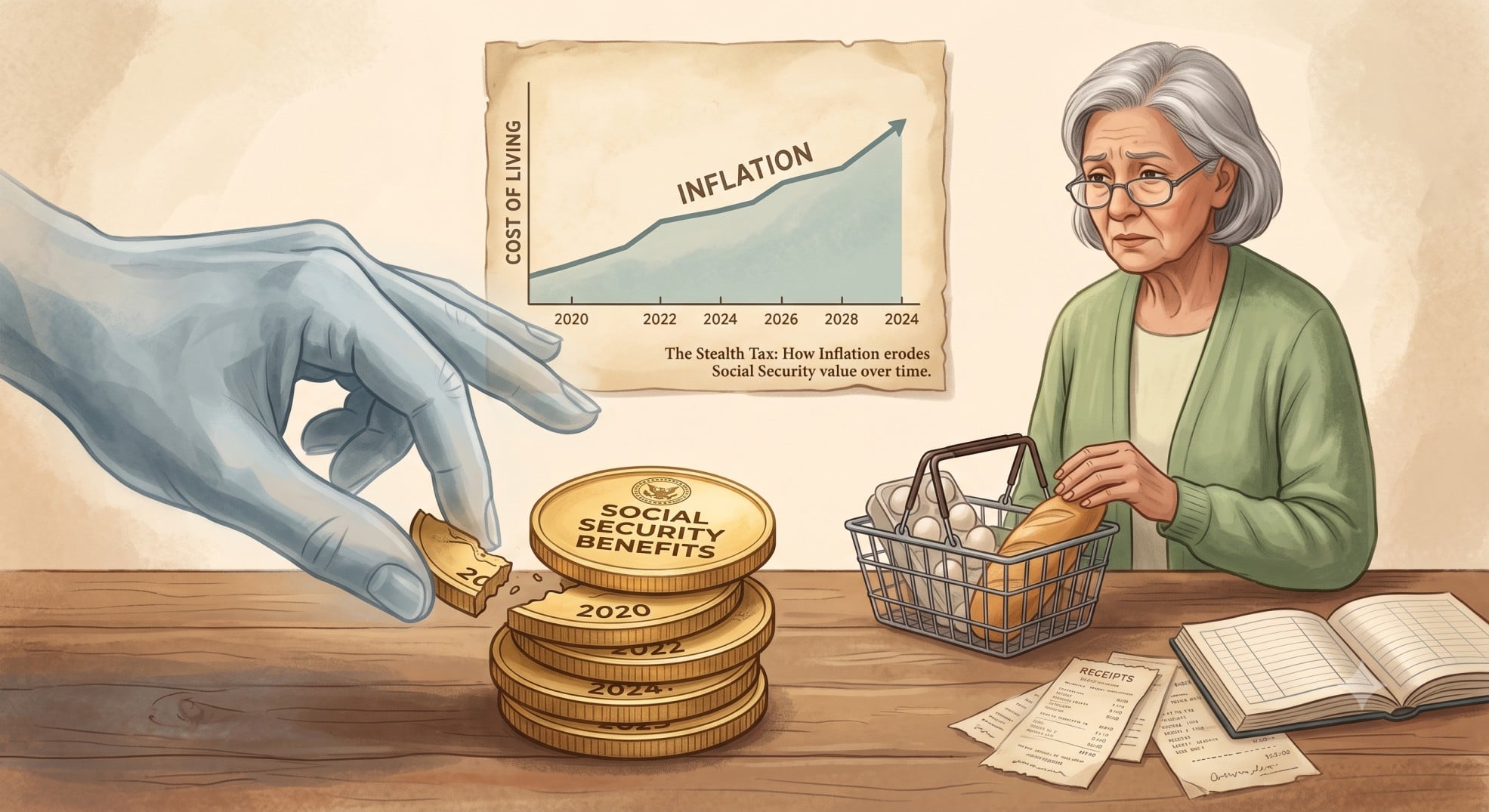
The nation’s 68 million Social Security beneficiaries are again watching a familiar arithmetic problem play out: the automatic cost-of-living adjustment meant to shield their checks from inflation rarely matches the bills they actually pay. For retirees on fixed incomes, the annual COLA announcement has become less a celebration than a stress test, a government-calculated number that decides whether a monthly budget holds together or quietly comes apart.
The tension is sharper than usual this year. The 2025 adjustment of 2.5 percent took effect in January, and early projections for the 2026 increase land near 2.7 percent, a figure finalized each October once federal statisticians finish collecting a summer’s worth of price data. Neither number approaches the 8.7 percent jolt beneficiaries received in 2023, when inflation ran hot, and both sit far above the zero adjustment recipients absorbed in 2016.
How the Annual Adjustment Is Actually Calculated
Social Security’s COLA is not a political decision. It is the product of a formula written into law: the percentage change in the Consumer Price Index for Urban Wage Earners and Clerical Workers, known as CPI-W, measured from the third quarter of one year to the third quarter of the next. The Bureau of Labor Statistics compiles the data, the Social Security Administration announces the result in October, and payments rise the following January.
That index tracks households earning most of their income from wages and clerical work. It is a reasonable proxy for working-age families. It fits far less well for people in their seventies, eighties and nineties, whose money flows disproportionately toward medical care, prescription drugs, housing and utilities rather than commuting costs, electronics and children’s clothing.
Where the Formula Falls Short for Older Households
The Bureau of Labor Statistics maintains a separate experimental measure, the CPI-E, built from the spending patterns of Americans 65 and older. Over long stretches it has climbed faster than CPI-W, largely because health care costs rise steadily and because older households devote a bigger share of their budgets to shelter and energy.
The Senior Citizens League, an advocacy group that lobbies on retirement issues, estimates that benefits have lost roughly a fifth of their purchasing power in recent years, a gap it attributes largely to this mismatch. Whether or not one accepts the precise figure, the direction of the critique is widely shared among economists who study retirement income. A smaller inflation adjustment compounds year after year, and the ground lost is not recovered when a larger COLA eventually arrives.
The Medicare Deduction That Shrinks the Raise
Even the headline COLA overstates what lands in a bank account, because most beneficiaries have Medicare Part B premiums withheld directly from their monthly payment. The standard Part B premium rose to $185.00 a month in 2025, up from $174.70, while the annual deductible climbed to $257.
A hold harmless provision in federal law protects most beneficiaries from seeing their net check shrink when the premium increase outpaces the COLA, but that protection is only partial. It does not cover new enrollees, higher-income beneficiaries who pay income-related premium surcharges, or people whose premiums are not withheld from Social Security. The practical result is that a 2.5 percent raise can feel considerably smaller once the health care line item is subtracted.
A Tax Threshold Frozen for Four Decades
Then there is the federal income tax on benefits. The base amounts that determine how much of a Social Security payment is taxable, $25,000 for single filers and $32,000 for married couples filing jointly, were written into law in 1983 and have never been indexed to inflation. The higher tier, $34,000 and $44,000, dates to 1993.
Because wages and benefits have grown while those thresholds stayed frozen, an expanding share of recipients now owes tax on part of their benefits. That is a structural squeeze rather than a rate increase, yet it feels like one to a retiree whose effective income drops as a result.
The Funding Debate Behind the Numbers
All of this unfolds against a long-running solvency argument. The 2025 Trustees Report projected that the trust fund paying retirement and survivors benefits would be depleted in 2033, at which point continuing tax revenue would cover roughly 77 percent of scheduled benefits unless Congress acts. The combined old-age, survivors and disability funds face a depletion date of about 2034.
Lawmakers have floated a range of fixes, including switching the COLA formula to CPI-E, raising or eliminating the payroll tax cap, lifting the full retirement age, and adjusting benefit formulas for higher earners. In January 2025, President Biden signed the Social Security Fairness Act, which repealed the Windfall Elimination Provision and the Government Pension Offset, boosting payments for police officers, firefighters, teachers and other public employees with non-covered pensions. That law settled a long-standing fairness complaint, but it left the inflation formula itself untouched.
Practical Steps for Stretching a Fixed Income
For households already collecting benefits, there are concrete levers. Reviewing a benefit estimate through the Social Security Administration’s online account tool helps confirm that earnings records are complete. Timing a claim matters, since delaying past full retirement age increases the payment by 8 percent a year up to age 70. Comparing Medicare Advantage and Medicare Supplement options each fall can lower out-of-pocket exposure
Source Reference (Google Trends): Latest News Updates on social security inflation impact seniors