For-Profit College Closures Leave Students Holding Debt
When a for-profit college shuts its doors without warning, the campus lights go dark but the tuition bill does not. That is the blunt arithmetic behind a subject that keeps climbing back into American news cycles: the sudden collapse of career-oriented colleges, the students stranded halfway through a credential, and the federal loan balances that outlive the institution itself.
The pattern is not new, but it is persistent. Chains that once marketed themselves as fast tracks to better jobs have repeatedly folded under regulatory pressure, financial mismanagement, or both, leaving students to discover that a transcript from a defunct school carries little weight with employers and that a closed campus does not automatically erase a debt. The renewed attention reflects a familiar frustration: the paperwork of higher education finance moves far more slowly than the institutions that generate it.
Why the Phrase Keeps Resurfacing
Each closure produces the same sequence of events. Students learn by email or by a notice taped to a door that classes are cancelled. Financial aid offices vanish before final transcripts can be requested. Transfer credits are evaluated by skeptical admissions officers at nonprofit colleges, who frequently accept only a fraction of the coursework. Meanwhile, loan servicers keep sending statements, because the borrower’s obligation to the federal government is separate from the school’s obligation to teach.
That gap between institutional failure and individual liability is what makes these stories travel. A closure is not a single event but a slow unraveling that can take years to resolve, and it tends to hit students with the least financial cushion: first-generation college students, working adults retraining mid-career, veterans using education benefits, and parents who co-signed or borrowed on a child’s behalf.
The Marquee Collapses That Shaped the Debate
The modern template was set in 2015, when Corinthian Colleges, once one of the largest for-profit chains in the country with more than 100 campuses, wound down operations under federal pressure. Roughly 16,000 students were displaced. The following year, ITT Technical Institute closed in September 2016, shuttering more than 130 campuses and affecting about 35,000 students in a single stroke. In late September 2023, the Art Institutes, a chain with roots stretching back to the 1960s, abruptly closed its remaining campuses and displaced roughly 10,000 students.
Those three cases are not anomalies so much as repetitions. Each involved aggressive enrollment marketing, heavy reliance on federal aid dollars, and a student body that had often been recruited on promises about job placement that proved difficult to verify. Regulators later concluded, in multiple settlements, that some recruiting practices crossed into deception.
How a Closure Turns Into a Debt Problem
The core mechanism is simple. Federal student loans are disbursed to the school, which credits them against tuition. When the school closes, the money has already been spent. The borrower still owes the balance, plus interest that continues to accrue during any period of forbearance or deferment. Students who cannot complete a credential are statistically more likely to struggle with repayment, because they carry the debt of a degree without the earnings premium that was supposed to justify it.
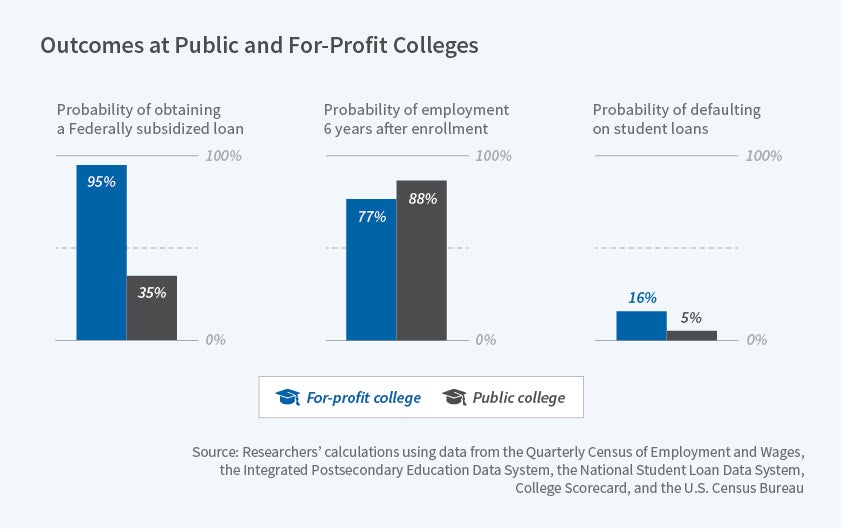
Research on for-profit enrollment has consistently found that these institutions educate a modest slice of American college students, roughly one in twenty, yet their former students account for a disproportionate share of federal loan defaults and delinquencies. The mismatch between enrollment share and default share is the statistic that keeps drawing congressional attention.
Borrower Defense and Closed School Discharge
Two federal remedies exist, and they are frequently confused. Closed school discharge applies to borrowers whose school closed while they were enrolled, or within 180 days of their withdrawal, and who did not complete their program elsewhere. Borrower defense to repayment is broader: it allows borrowers to seek cancellation on the grounds that the school misrepresented something material, such as job placement rates or transferability of credits.
Both pathways are administrative, evidence-heavy, and slow. The 2022 settlement in the Sweet v. Cardona case committed roughly $6 billion in relief to about 200,000 borrowers who had alleged fraud, a figure that illustrates both the scale of the problem and the years of litigation required to address it. The Education Department has approved billions of dollars in borrower defense claims since 2021, but processing backlogs have been a recurring complaint from borrower advocates and from members of Congress in both parties.
Gainful Employment and the 90/10 Rule
Prevention has moved on a separate track. The gainful employment rule, reinstated in 2023 and effective the following July, measures whether graduates of a program earn enough to service their debt. A program can lose federal aid eligibility if the typical graduate’s annual loan payment exceeds 8 percent of earnings, or 20 percent of discretionary income. Separately, the 90/10 rule bars any institution from taking more than 90 percent of its revenue from federal sources, and a 2021 statutory change folded veterans’ GI Bill benefits and military tuition assistance into that federal count starting in 2024, closing a loophole that critics said had fueled aggressive recruiting of service members.
The regulatory pendulum has swung before and will swing again. The first gainful employment rule took effect in 2011, was rewritten in 2014, and was effectively dismantled in 2019 before being rebuilt. Each iteration produced a wave of program closures, and each reversal produced new enrollments at schools that had previously failed the test.
Public Trust and Institutional Scrutiny
These collapses land in a broader climate of diminished confidence in large institutions of every kind, a mood that shows up in survey work well beyond education, including analysis of public trust in institutions across the Atlantic. Schools that promise career transformation and then close overnight feed exactly that skepticism.
Media coverage has intensified the pressure. Reporters have documented recruitment scripts, inflated placement claims, and the personal toll on students who relocated for programs that disappeared, in much the same way intense media scrutiny has reshaped debates over privacy and accountability elsewhere. For affected students, the practical question is rarely about policy theory. It is about whether a discharge application will be approved before the collection calls begin.
Who Absorbs the Damage
Veterans are a recurring casualty. Because GI Bill money historically counted outside the 90 percent cap, for-profit recruiters had a financial incentive to enroll service members, and several chains were later found to have done so with misleading claims about accreditation and job placement. Low-income students and Pell Grant recipients face a parallel problem: the federal grant money is gone, the loan money is owed, and the transfer options are limited because nonprofit colleges rarely accept the full complement of credits.
State attorneys general have stepped into the gap where federal enforcement has lagged. A coalition of states has pursued investigations into recruiting practices, and some have secured settlements that include debt relief and forgiveness of outstanding institutional charges. The outcomes vary widely by state, which means a student’s zip code can determine how much of a bad decision gets undone.
What Students Should Do First
For anyone whose school has closed, the sequence matters. Request official transcripts immediately, before records become harder to retrieve. Obtain a written credit transfer evaluation from any prospective new school. Then determine which federal remedy applies: closed school discharge if the timing fits, borrower defense if there were misrepresentations. Keep every enrollment agreement, marketing email, and placement-rate claim, since documentation drives these applications. Borrowers should also confirm whether their loans are in deferment, forbearance, or active repayment, because interest behaves differently in each status.
What to Watch Next
The underlying tension is unresolved. Career-focused education fills a genuine need for adult learners who cannot spend four years on a traditional campus, and many for-profit institutions operate responsibly. But the sector’s worst actors have repeatedly demonstrated that when enrollment revenue is tied to federal aid and oversight is thin, the risk transfers directly to students who can least afford it. Watch the gainful employment data releases, the pace of borrower defense adjudication, and whether the 90/10 revision survives the next round of legal and political challenges. Each of those outcomes determines, in concrete dollars, how much of a failed college’s debt ends up on a former student’s credit report.
Source Reference (Google Trends): Latest News Updates on for profit college sudden closure debt
Frequently Asked Questions (FAQ)
Do I still owe student loans if my college closes?
Yes, in most cases the loan obligation remains because the debt is owed to the federal government, not the school. Borrowers may qualify for closed school discharge or borrower defense to repayment, but both require an application and supporting evidence.
What is the difference between closed school discharge and borrower defense?
Closed school discharge applies when a school shuts down while a borrower is enrolled or within 180 days of withdrawal and the student did not finish the program elsewhere. Borrower defense to repayment covers cases where the school made material misrepresentations, such as false job placement rates.
Which for-profit college closures affected the most students?
ITT Technical Institute closed more than 130 campuses in September 2016, displacing roughly 35,000 students. Corinthian Colleges affected about 16,000 students in 2015, and the Art Institutes closed in September 2023 with roughly 10,000 students affected.
What does the 90/10 rule require?
It bars for-profit institutions from receiving more than 90 percent of their revenue from federal sources. A 2021 statutory change added GI Bill and military tuition assistance to the federal tally beginning in 2024, closing a long-criticized loophole.
How fast are borrower defense claims processed?
Processing has been slow. The Sweet v. Cardona settlement committed roughly $6 billion in relief to about 200,000 borrowers after years of litigation, and backlogs in adjudicating individual claims remain a persistent complaint.