Rams Great Lawrence McCutcheon Dies at 76
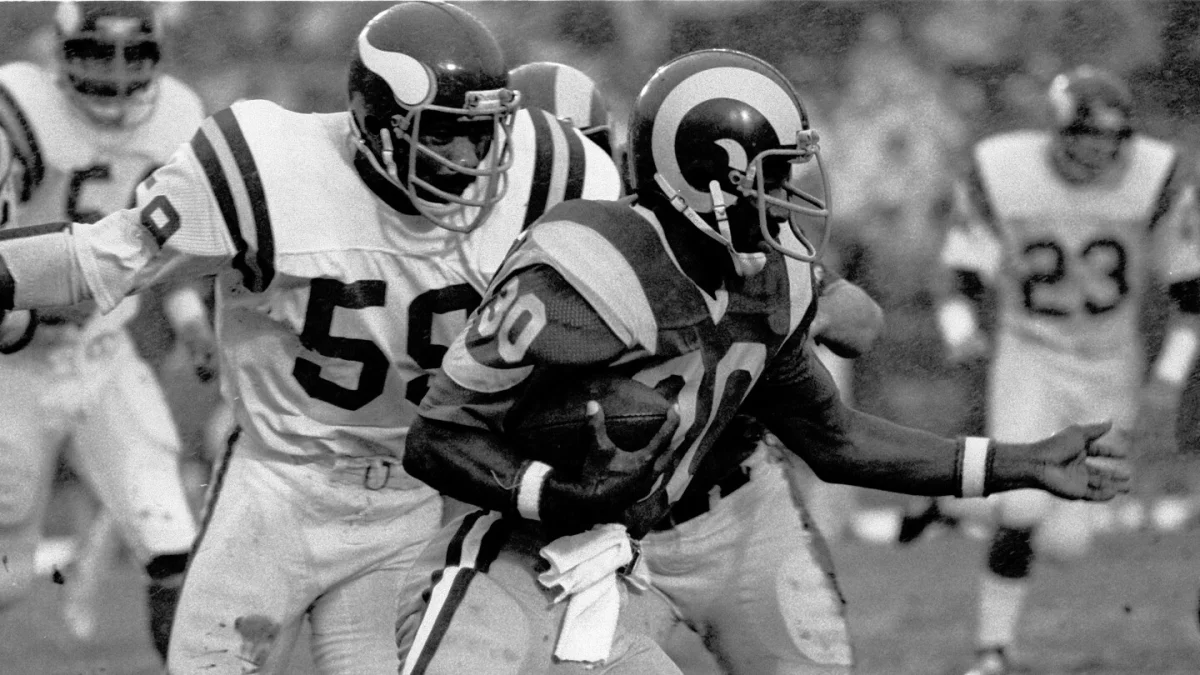
Former Los Angeles Rams running back Lawrence McCutcheon, once the franchise’s all-time leading rusher and later a 32-year presence in its front office, died Friday at 76 following a long and courageous battle with Parkinson’s disease. He died on Oct. 23 with family at his bedside, according to the team and a statement released by his relatives.
The death closes an unusually long association between one man and one organization, a bond that began in the early 1970s when McCutcheon took handoffs in the Los Angeles backfield and continued into the 2000s as he evaluated college prospects and helped assemble rosters. Few players in Rams history have moved so completely from the field to the personnel department, and fewer still have remained as influential for as many decades.
A backfield cornerstone of the 1970s Rams
McCutcheon played eight seasons for the Rams, from 1972 through 1979, a stretch in which Los Angeles dominated the NFC West and built a reputation as one of the league’s most consistent regular-season powers. A draft choice out of Colorado State, he became the focal point of coach Chuck Knox’s run-first offense, the system widely known as Ground Chuck, and he rewarded that trust with five Pro Bowl selections and second-team All-Pro honors.
His timing was ideal. The Rams of that era won seven consecutive division titles from 1973 to 1979 and reached Super Bowl XIV at the end of the 1979 campaign, a game Los Angeles lost to the Pittsburgh Steelers. McCutcheon was a central figure in the run that carried the club through those winters, and his name stayed near the top of the team’s record book long after his departure.
He did not finish his career in Los Angeles. After the 1979 season he moved on, spending time with Denver, Seattle and Buffalo before retiring following the 1981 campaign, a vagabond ending that did little to diminish what he had built in Southern California.
The numbers that explain the longevity
McCutcheon’s statistics justify both the praise he received as a player and the loyalty the organization showed him afterward. In 109 games with 82 starts he carried 1,521 times for 6,578 yards and 26 touchdowns, and he added 198 receptions for 1,799 yards and 13 more scores. Those are the numbers of a durable, every-down back in an era when the position absorbed punishment that modern rotations are designed to avoid.
The rushing total stood as the Rams’ career benchmark for years, a franchise record eventually eclipsed by Eric Dickerson in the 1980s and later by Steven Jackson. That his name remained in that conversation across multiple generations of runners says as much about his consistency as any single season did.
Thirty-two years shaping the roster
What separated McCutcheon from most former players was the second act. He returned to the Rams and worked 32 years in the front office as a scout and director of player personnel, evaluating talent across the franchise’s move from Los Angeles to St. Louis and its long rebuilding project in the Midwest.
The team said his impact spanned generations, and the description is literal: he scouted players who never shared a locker room with him, and he helped shape rosters for coaches who were children when he was gaining yards in Los Angeles. Scouting is an unglamorous craft built on highway miles, dusty campus practices and thick binders of notes, and McCutcheon stayed with it long after his playing fame had faded.
That durability of service is rare. Many athletes make a brief stop in an organization after retirement; McCutcheon effectively built a second career there, and the Rams’ decision to keep him close for so long reflects how the franchise viewed his judgment.
A family’s loss and a request for research support
The statement from his family framed the loss in personal rather than athletic terms. It described McCutcheon as a husband, a brother, a father, a grandfather and a great-grandfather, and said he would be missed and remembered forever.
The family also asked that donations in his memory be directed to the Michael J. Fox Foundation for Parkinson’s research rather than to flowers, turning grief into funding for the disease that defined his final years. The request is a familiar one in obituaries for public figures who live with Parkinson’s, and it steers attention toward research into a progressive neurological disorder that affects movement, balance and speech.
Similar gestures have followed other recent losses across sports and public life, including the tributes that accompanied the passing of Reds World Series hero Todd Benzinger and the family statements issued after the death of Kyle Kennedy, an RFK granddaughter.
A legacy measured in yards and in years
McCutcheon’s career sits at an intersection that is becoming harder to find in modern football. He played in an era of run-heavy offenses and unforgiving turf, when a featured back absorbed 300 carries and the passing game functioned as a complement. He then transitioned into an age of free agency, salary caps and analytics-driven scouting, and he survived there too.
For the Rams, the loss is both institutional and historical. The franchise that returned to Los Angeles in 2016 and later won Super Bowl LVI has relatively few living links to its 1970s peak, and McCutcheon was among the most prominent, a name that appeared in the record book and on the payroll at the same time.
For the wider football audience, his death is a reminder of how the position has changed and of the physical cost that came with it. Parkinson’s disease has no known cure, and the family’s chosen memorial reflects an acknowledgment that the fight continues long after the applause ends.
The family statement describes a household that spans several generations, with children, grandchildren and great-grandchildren among those mourning him. His football record will be preserved in the Rams’ archives; the donations made in his name, his family hopes, will serve people facing the same diagnosis.
Source Reference (mogazmasr.com): Lawrence Mccutcheon dies at 76 after long battle with Parkinson's disease
Frequently Asked Questions (FAQ)
How did Lawrence McCutcheon die?
The former Rams running back died on Oct. 23 at age 76 with family at his bedside, after a long and courageous battle with Parkinson's disease.
What were Lawrence McCutcheon's career statistics?
In 109 games with 82 starts he recorded 1,521 carries for 6,578 yards and 26 touchdowns, plus 198 receptions for 1,799 yards and 13 touchdowns. He was a five-time Pro Bowl selection and a second-team All-Pro.
How long did he work in the Rams front office?
McCutcheon spent 32 years with the organization as a scout and director of player personnel after his playing career, an association the team said spanned generations of players and coaches.
Where should memorial donations be sent?
The family asked that gifts be made to the Michael J. Fox Foundation for Parkinson's research in lieu of flowers.
{“@context”:”https://schema.org”,”@type”:”FAQPage”,”mainEntity”:[{“@type”:”Question”,”name”:”How did Lawrence McCutcheon die?”,”acceptedAnswer”:{“@type”:”Answer”,”text”:”The former Rams running back died on Oct. 23 at age 76 with family at his bedside, after a long and courageous battle with Parkinson’s disease.”}},{“@type”:”Question”,”name”:”What were Lawrence McCutcheon’s career statistics?”,”acceptedAnswer”:{“@type”:”Answer”,”text”:”In 109 games with 82 starts he recorded 1,521 carries for 6,578 yards and 26 touchdowns, plus 198 receptions for 1,799 yards and 13 touchdowns. He was a five-time Pro Bowl selection and a second-team All-Pro.”}},{“@type”:”Question”,”name”:”How long did he work in the Rams front office?”,”acceptedAnswer”:{“@type”:”Answer”,”text”:”McCutcheon spent 32 years with the organization as a scout and director of player personnel after his playing career, an association the team said spanned generations of players and coaches.”}},{“@type”:”Question”,”name”:”Where should memorial donations be sent?”,”acceptedAnswer”:{“@type”:”Answer”,”text”:”The family asked that gifts be made to the Michael J. Fox Foundation for Parkinson’s research in lieu of flowers.”}}]}