Rrahmani: Napoli Captaincy Is a Privilege After Lazio Draw
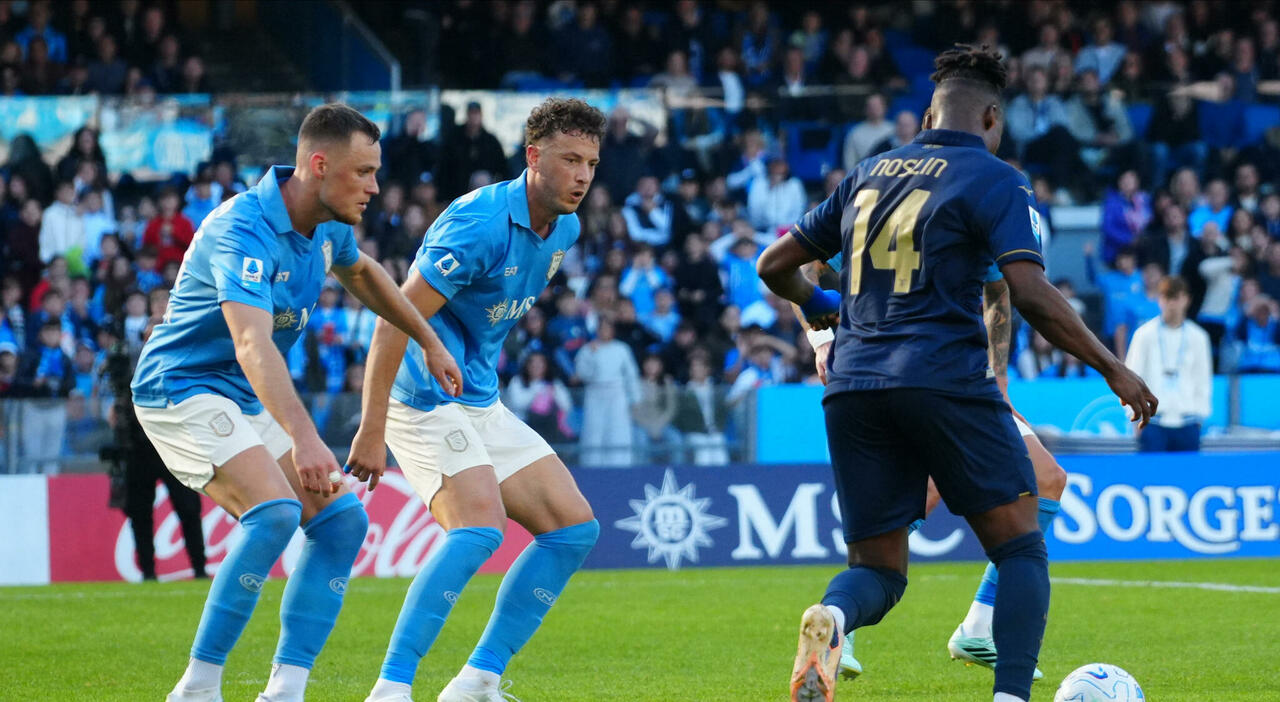
Amir Rrahmani did not wait for the noise to settle. Minutes after the final whistle of Napoli’s 1-1 draw with Lazio at the Stadio Diego Armando Maradona, the centre-back sat down with DAZN with the captain’s armband still fresh in his mind and delivered an assessment that carried both the honour of the role and the frustration of a night that slipped away. Calm, direct and free of the usual post-match hedging, the Kosovo international gave the clearest account yet of a match that divided neatly into two very different halves.
His opening line set the tone for everything that followed. Asked what the dressing room had felt like during such a demanding evening, Rrahmani went straight to the meaning of the armband rather than the scoreline, and from there he moved through the tactical difficulties of the first period, the improvement after the interval, the flashpoint involving Noa Lang and the wider reality of a Serie A that no longer offers comfortable afternoons.
The armband and what it represents at Napoli
“Being captain of Napoli is a privilege, because I represent an entire people and the club,” Rrahmani said. The phrasing was not the polished language of a media officer but the instinctive answer of a player who has spent enough years in the city to understand what the role carries. At Napoli the captaincy is never merely administrative. It is a public office of sorts, scrutinised by a support base that measures its team against decades of emotional history, and Rrahmani spoke about it with the seriousness that status demands.
Since arriving from Hellas Verona in 2020, the defender has been one of the most consistent presences in the Napoli back line, a front-footed centre-back who defends aggressively in duels and prefers to step into midfield rather than retreat towards his own penalty area. His partnership with Giovanni Di Lorenzo on the right of the defensive unit has underpinned much of the club’s recent success, and the armband passing to him for this fixture underlined how deeply he has settled into the leadership structure of the squad.
A first half of discomfort, a second half of belief
Rrahmani was unusually candid about the opening 45 minutes. “It was a very difficult match: in the first half we struggled a little, while after the break we did well and we could even have won,” he explained. That summary matched the shape of the contest, with Lazio pressing with intent and disrupting Napoli’s build-up from the back, forcing the home side into hurried decisions and long balls that handed possession back too easily.
The second half told a different story. Napoli pushed their line higher, found space between Lazio’s midfield and defensive blocks, and created the kind of chances that had been absent earlier. Marco Baroni’s side, organised and compact, defended those spells with numbers behind the ball and looked to strike on the counter, and the balance between Napoli’s control and Lazio’s threat kept the result uncertain until the final whistle. The regret in Rrahmani’s voice was not about effort but about the missing decisive moment.
The Lang flashpoint and a stadium on edge
Rrahmani also addressed the most tense passage of the evening, when Noa Lang was booked and then subjected to whistles from sections of the home support. Rather than ignore the episode, the captain described exactly what he told the Dutch winger on the pitch. “I told him to be careful, because he had already picked up a yellow card and risked a second, as the referee had warned. Staying with ten men would have been a problem for the whole team. I asked him to calm down,” he said.
That intervention was leadership in its most practical form. Lang’s direct running and willingness to take on defenders make him valuable, but the same instinct can tip into recklessness when the crowd turns and the referee’s patience thins. Rrahmani admitted he did not know precisely what had happened between the player and the supporters, and he used the moment to make a broader point about collective responsibility rather than apportion blame, describing the atmosphere around the club as something closer to a heated public debate than a simple football argument.
No easy matches and a league raising its tempo
The captain’s most revealing comments came when he moved away from the specifics of the result. “We all try to give our maximum on the pitch. We have to do it together, in every match: there are no easy games. Serie A is improving and the tempo has risen, so all of us have to give something more,” he said. That observation captures a genuine shift in Italian football, where even mid-table sides now press with coordinated intensity, defend in structured blocks and punish lapses of concentration within seconds.
For Napoli, the implication is clear. A squad built to dominate the ball cannot assume that possession alone will produce results, and the margin between victory and a draw has narrowed considerably. Rrahmani’s insistence on collective effort is also a message aimed inward, a reminder that individual quality has to be matched by discipline when matches become physical and fragmented, as this one did after the interval.
The details that decide a season
Rrahmani returned repeatedly to the theme of small margins. “It is always the details that decide matches, and today we were unable to find the decisive one,” he said. At Napoli’s level, those details take familiar shapes: a loose first touch in the box, a run that arrives half a second late, a defensive line that drops when it should hold. Over a campaign, such moments separate the teams that contest the title from those that settle for a place in Europe, and the defender’s honesty suggests a squad aware that its performance level must rise.
The point keeps Napoli moving without resolving the questions around their consistency, and it will be examined again when the return fixture arrives, this time with the added pressure of a second act in the same way a Commander-in-Chief’s Trophy first leg sets up everything that follows. Lazio, for their part, leave with evidence that their structure travels well, having absorbed pressure in the second half without collapsing.
What happens next for both sides
Napoli must now manage a schedule that offers little recovery time while the debate about their attacking fluency continues. Rrahmani’s contribution on the night, both defensively and as a spokesperson, indicates a dressing room that is not hiding from its shortcomings. Lazio take away a result that will strengthen belief in their shape and their capacity to frustrate stronger opponents on their own ground.
For the neutral, the lasting image is of a captain stepping into the interview area and answering every question put to him without evasion. Rrahmani did not present the draw as a turning point or a disaster. He described a difficult evening, a better second half, a young teammate he had to protect from a second booking, and a league that demands more each season. It was the kind of account that explains why the armband, in his words, is a privilege, and why the standard attached to it never drops.
Source Reference (ilmattino.it): Napoli-Lazio 1-1, Rrahmani: «Essere capitano è un privilegio. Nel primo tempo siamo andati un po' in difficoltà»
Frequently Asked Questions (FAQ)
What was the final score of Napoli versus Lazio?
The match at the Stadio Diego Armando Maradona finished 1-1, with Napoli pushing for a winner in the second half but unable to find a decisive goal.
Who was Napoli's captain against Lazio?
Amir Rrahmani wore the armband for the evening. The Kosovo international centre-back described the role as a privilege because he represents the club and the entire city.
What did Rrahmani say to Noa Lang during the match?
Rrahmani told Lang to be careful after the winger had already been booked, warning that a second yellow card would have left Napoli with ten men. He asked him to calm down and said he did not know exactly what had happened with the supporters.
How did Rrahmani assess Napoli's performance?
He admitted Napoli struggled in the first half, said they improved after the break and could have won, and stressed that small details decide matches while Serie A's rising tempo means every player must give more.