Oman, Uzbekistan Target $5bn Joint Project Portfolio
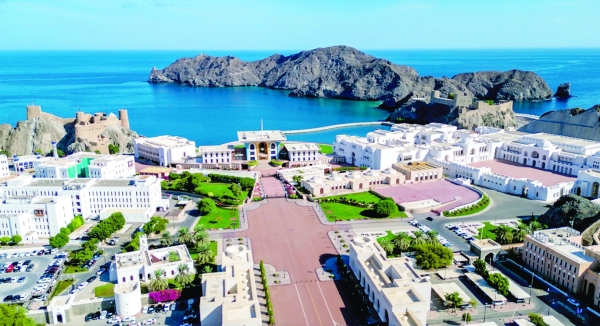
Economic ties between Oman and Uzbekistan are moving beyond ceremonial goodwill into a structured investment programme, with President Shavkat Mirziyoyev due in Muscat on November 16 for a state visit that officials on both sides believe can unlock a joint project portfolio worth more than $5 billion.
The visit runs across November 16 and 17 and follows the sixth session of the Omani-Uzbek Joint Committee, which convenes in the Omani capital on Sunday after its fifth round was held in Tashkent in June 2025. Officials describe the sequencing as deliberate: technical groundwork first, then the political signature that turns memoranda into timetables.
A relationship traced to the Silk Road
Diplomatic relations were formalised on April 22, 1992, although the commercial logic behind them predates that date by centuries, resting on routes that once carried caravans between Central Asia and the Arabian Peninsula. The modern legal framework has been assembled through agreements covering investment protection, the avoidance of double taxation, trade and economic cooperation, and air services.
The financial engine of the relationship is the Omani-Uzbek Investment Company, known as UzOman, a joint venture between the Oman Investment Authority and Uzbekistan’s Fund for Reconstruction and Development. It works with capital of RO76.9 million ($200 million) and holds positions in industry, financial services, logistics, infrastructure and real estate.
Trade volumes rising from a low base
Figures from the National Centre for Statistics and Information show bilateral trade climbing from RO286,000 in 2024 to RO1.186 million in 2025, with RO1.154 million recorded during the first eight months of 2026 alone. Laziz Kudratov, Uzbekistan’s Minister of Investment, Industry and Trade, placed the eight-month total above $3 million, a rise of more than three and a half times on the same period a year earlier and already larger than the whole of 2025.
Omani exporters shipped household goods, personal luggage and musical instruments in 2025, a mix that shows cultural products travelling alongside consumer staples, the same crossover that keeps audiences attentive to milestones such as the death of Mark McGuinn. Imports from Uzbekistan consisted of floor coverings, textiles, clothing, fabrics, food products and cosmetics.
Uzbek investment registered in Oman grew from RO2.564 million in 2024 to RO2.909 million in 2025, spread across 57 companies whose activities span trade, construction, manufacturing and professional services.
Dry ports, rail freight and a new air bridge
Logistics has become the most visible area of cooperation. In October 2024, Asyad Group and Uzbekistan’s Ministry of Investment, Industry and Trade signed an agreement to explore opportunities in dry ports, railways, warehouses, air freight and e-commerce. Asyad and its partners have since taken majority stakes in two logistics companies in Tashkent whose dry ports handle roughly a quarter of Uzbekistan’s rail freight container traffic.
Connectivity took a further step in July 2026 when Oman Air launched its first direct service between Muscat and Tashkent, operating twice a week. The route is intended to carry business travellers, investors and tourists in both directions, and it removes a connection through a third country that had long made meetings expensive and slow.
Inside the $5 billion project pipeline
UzOman has already committed more than $256 million to building materials, logistics, retail, hospitality, education and agricultural chemicals. Its most concrete industrial bet is participation in financing a $75 million plant in the Tashkent region producing crop protection materials and fertilisers, a project aimed squarely at Uzbekistan’s large agricultural base.
Beyond that, the two governments are working through a joint portfolio of around 35 projects carrying a combined value of more than $5 billion. Food processing is a leading candidate. Uzbekistan can supply fresh and dried fruit, vegetables and processed foods, while Omani fish, seafood and dates have a potential market among Uzbek consumers.
Tourism is the other obvious beneficiary. Uzbekistan’s historic cities of Samarkand, Bukhara and Khiva, together with mountain resorts near Tashkent, are being promoted as destinations for Omani travellers, and the direct flight is expected to encourage investment in hotels and hospitality.
What the ministers want from the visit
Anwar bin Hilal al Jabri, Minister of Commerce, Industry and Investment Promotion, described the presidential visit as an important milestone that reflects the determination of both leaderships to widen cooperation. He said the trip offers a chance to combine the economic strengths of the two countries and to build partnerships that serve both the public and private sectors.
He characterised Uzbekistan as a promising economic partner in Central Asia on the strength of its industrial base, natural resources and geographic position, while pointing to Oman’s investment climate, infrastructure, ports and free zones as the complementary offer. Cooperation, he argued, should move past conventional trade into industrial partnerships, joint projects, technology transfer and a stronger business presence in each market.
Al Jabri also called for a wider range of traded products, better market access and simpler procedures for exporters and importers, naming manufacturing, food processing and resource-linked industries as the areas with the most room to grow. The Joint Committee, he added, will keep identifying priorities, coordinating government efforts and clearing obstacles that confront investors.
Kudratov attributed the acceleration to the shared political commitment of His Majesty Sultan Haitham bin Tarik and President Mirziyoyev, noting that the past two years have brought intensified engagement, expanded logistics cooperation and the launch of direct flights between the two capitals. In his account, Oman’s ports at Suhar, Al Duqm and Salalah, combined with its free zones and trade agreements, give Uzbek companies a route into Gulf, South Asian and East African markets, whether through distribution centres, warehouses, processing and packaging plants or re-export operations.
Uzbekistan’s counter-offer to Omani investors rests on raw materials, skilled labour and access to Central Asian markets. The country operates 34 special economic zones, more than 400 small industrial zones and 27 technology parks, backed by tax and customs incentives. It attracted more than $43 billion in foreign investment in 2025, an increase of 24 per cent on 2024, and Omani citizens can enter visa-free for up to 30 days.
Diplomats and chambers prepare the ground
Sayyidah Wafa bint Jabr al Busaidi, Oman’s ambassador to Uzbekistan, said the November 16 to 17 visit will allow deeper political consultations and progress on economic and investment files, with several agreements and memoranda of understanding expected to be signed in political, economic, developmental and cultural fields. She stressed the value of links between the two business communities and of using direct flights to stimulate trade and tourism.
Abdul Salam Hatamov, Uzbekistan’s ambassador to Oman, said the visit should lift relations to a new level and lay stronger foundations, with talks centred on political dialogue, trade, investment, transport and logistics. Faisal bin Abdullah al Rawas, chairman of the Oman Chamber of Commerce and Industry, framed the visit as a chance to widen trade and investment ties, calling for closer contact between companies through bilateral meetings, business forums and trade delegations.
Legislation still to be finalised
Two legal instruments remain in preparation: a preferential trade agreement and an updated investment protection agreement. Officials are also converting existing agreements and memoranda into an implementation road map with named projects, deadlines and responsible institutions, a step that investors typically treat as the real test of political intent. Both governments say the private sector will carry the delivery, and the coming days in Muscat will show how quickly the paperwork becomes cargo.
Source Reference (omanobserver.om): Oman, Uzbekistan to expand trade and investment ties
Frequently Asked Questions (FAQ)
When is President Shavkat Mirziyoyev visiting Oman?
The Uzbek president's state visit to Oman is scheduled for November 16 and 17, following the sixth session of the Omani-Uzbek Joint Committee in Muscat on the preceding Sunday.
How large is trade between Oman and Uzbekistan?
Uzbek officials put two-way trade above $3 million in the first eight months of 2026, more than three and a half times the same period of 2025 and higher than the full 2025 total. Omani statistics show trade of RO1.186 million in 2025, up from RO286,000 in 2024.
What is UzOman and how much has it invested?
UzOman is the Omani-Uzbek Investment Company, a joint venture of the Oman Investment Authority and Uzbekistan's Fund for Reconstruction and Development with capital of RO76.9 million ($200 million). It has invested more than $256 million in building materials, logistics, retail, hospitality, education and agricultural chemicals.
Are there direct flights between Muscat and Tashkent?
Yes. Oman Air launched its first direct Muscat to Tashkent service in July 2026, operating twice weekly to support business, investment and tourism exchanges.
Do Omanis need a visa to travel to Uzbekistan?
Omani citizens can enter Uzbekistan without a visa for stays of up to 30 days, a facility officials expect to boost tourism and business travel alongside the new direct air link.