Colombia Quake Toll Tops 250 as Cali Rescue Continues
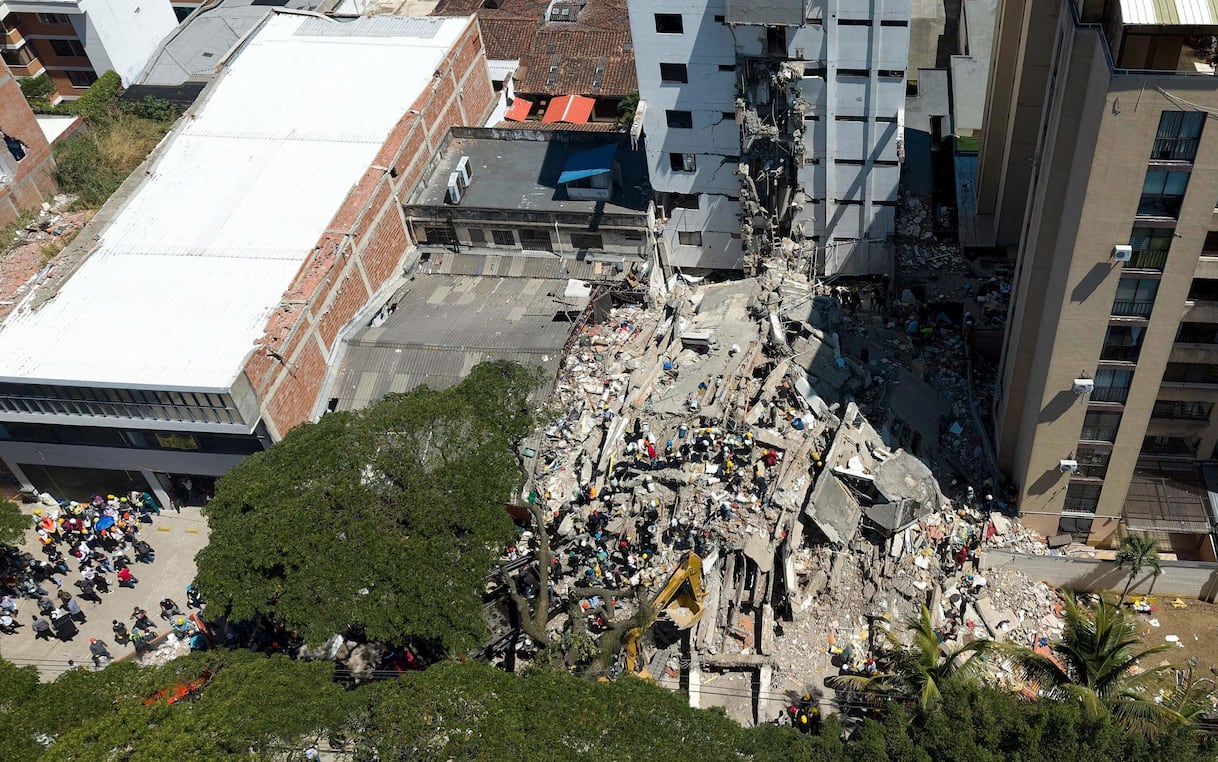
The most powerful earthquake to strike Colombia in more than a decade has killed at least 254 people and injured several hundred more, as rescue crews in the country’s western valleys race against the 72 hour survival window beneath the debris of collapsed homes, hospitals and schools. Authorities caution that the toll remains provisional, with roughly 4,000 people still unaccounted for and entire neighborhoods of the coffee growing heartland reduced to ruins.
The magnitude 7.4 rupture struck at 07:34 local time, with its epicenter near San José del Palmar in the Pacific department of Chocó, roughly 100 kilometers below the surface. Initial readings placed the break at about 82 kilometers of depth, with later assessments pushing it closer to 107. The Colombian Geological Service ranks the tremor among the five strongest ever recorded in the country by force, and the shaking was felt as far away as Venezuela and Ecuador.
Diana Pulled From the Rubble After 30 Hours
In Cali, Colombia‘s third largest city and one of the hardest hit, a young woman named Diana was extracted alive after spending 30 hours trapped inside a collapsed building. Mayor Alejandro Eder had promised on social media that “we will not rest until we get her out,” attaching an image in which her face was visible through a fissure opened between reinforced concrete and brick. He announced her rescue with open joy once crews had carved a safe passage through the wreckage.
Hours earlier, rescuers had freed a mother and her newborn baby from the ruins of a five story building that came down in the Ciudad Capri neighborhood. “It is a miracle: the mother protected the little one with her body,” said Carlos Ortiz, one of the rescue workers involved. The woman suffered fractures, while the infant escaped with minor cuts during the extraction and was listed as stable. Seven other people were pulled from the same structure, and Ortiz said crews had detected signs of life from an elderly couple and their seven year old grandson.
A Hospital Becomes the Symbol of the Catastrophe
Four floors of the Universidad del Valle hospital (HUV) in Cali gave way, destroying the wing that housed pediatric and neonatal intensive care. Its director, Irne Torres Castro, described “a drama within a drama,” confirming that at least one patient had died inside the building and that about ten people were still trapped. Seven had already been brought out alive, with operations concentrated on the third and fourth floors and a reinforced vault on the fifth, where heavy machinery was deliberately kept away to prevent further collapse. More than 600 patients were evacuated. Unable to admit new cases, hospitals across Cali declared a red alert after reaching 100 percent of their capacity, leaving little room to absorb the injured still arriving from outlying towns.
Pereira, Manizales and the Coffee Belt Bear the Brunt
Pereira, the capital of Risaralda and the major city closest to the epicenter, recorded the heaviest loss of life with 101 confirmed deaths, followed by Cali with 95, according to local authorities. A four story building in Pereira disintegrated within seconds inside a cloud of dust as residents fled into the street. The association of mayors counted 165 collapsed buildings nationwide at one stage of the emergency.
In Manizales, one of the side towers of the Catedral Basílica Metropolitana Nuestra Señora del Rosario came down, damaging a neo Gothic landmark that is the tallest religious building in Colombia and one of the tallest of its style in the Americas. In Quibdó, close to the epicenter, masonry littered the roads and several structures gave way.
Damage spread across the coffee region and beyond. Officials counted 60 schools that were severely damaged or destroyed, and Interior Minister Rodrigo Lara noted that many children likely owe their lives to timing: the quake hit at 07:30, a single day before classes were due to start. Matecaña airport in Pereira was partially destroyed, six airports suspended operations at the height of the emergency, and electricity, water, communications and health services were interrupted across wide areas. The terminal serving Cali, Alfonso Bonilla Aragón, later resumed normal operations after the complete restoration of power and technical inspections.
Cali imposed a curfew from 20:00 until 06:00 and deployed troops to deter looting, while roughly 600 people were assisted in the streets and thousands of families spent the night outdoors rather than return to buildings that could still give way.
Bogotá Moves to Unlock Emergency Funding
Finance Minister Miguel Gomez told Parliament that the government is preparing to declare a state of economic emergency in order to raise funds for the victims, and confirmed a loan of up to 450 million dollars from the World Bank. Interior Minister Rodrigo Lara, coordinating relief from Pereira, said the immediate priorities were saving lives, preventing outbreaks of disease and guaranteeing essential public services, adding that reconstruction would require a specialized agency. Assessments cover bridges, public buildings, schools, hospitals and the regional government headquarters.
Senate president Honorio Henríquez urged members of Congress to donate a month of their salary to families hit by the disaster and announced the creation of a bicameral commission to oversee the institutional response. “Colombia needs us to be united,” he said.
President Abelardo de la Espriella, who spent the night in Cali, traveled on to the coffee region. Speaking from the unified command post, he said the priority was locating 188 missing people in the city, where nearly 5,000 homes were damaged or destroyed. Outside Cali and Buenaventura, he reported 35 deaths across 40 municipalities, around 700 injured, three hospitals collapsed, 18 damaged and 39 schools affected.
Source Reference (tg24.sky.it): Terremoto in Colombia, oltre 250 morti. Donna estratta viva da macerie dopo 30 ore