UK Royal Family Approval Ratings: What Polls Reveal
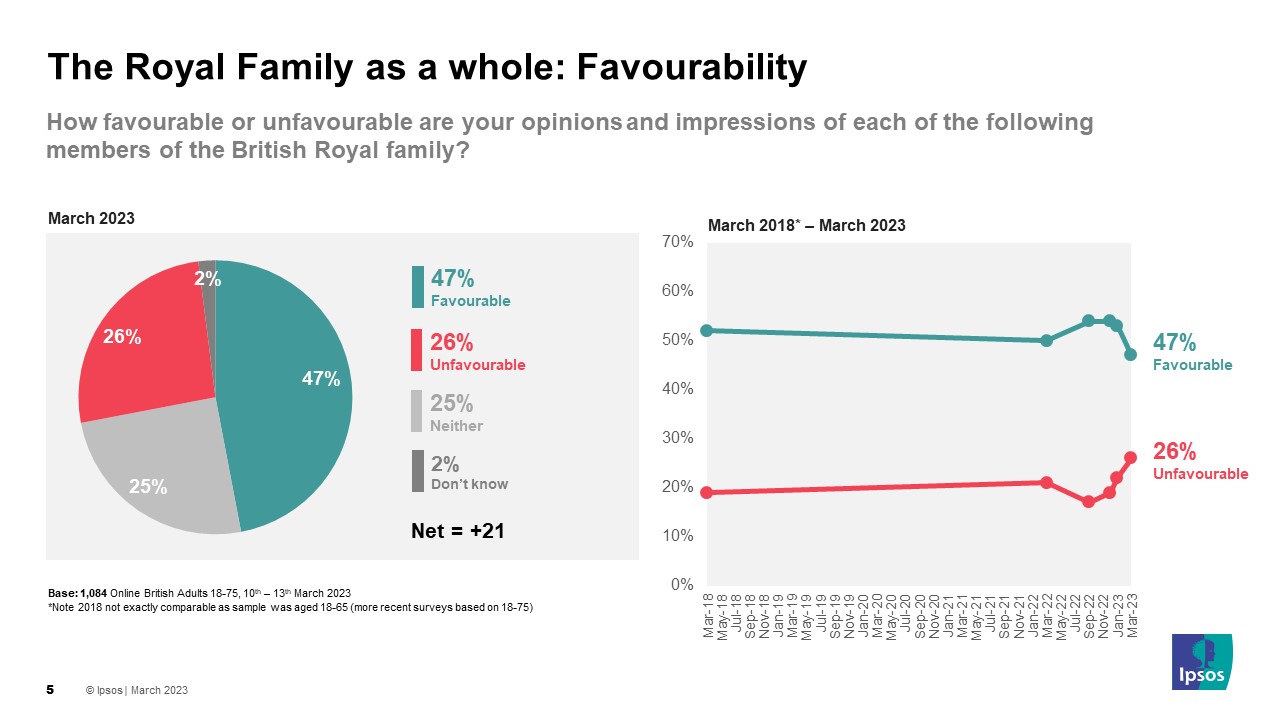
Search interest in UK royal family approval ratings keeps surging on both sides of the Atlantic, and the reasons reach well beyond curiosity about a famous family. Polling on the Windsors functions as a live referendum on an ancient institution: how much deference a modern democracy is still willing to extend to a hereditary monarchy, and what that monarchy must do to keep the arrangement intact. Firms such as YouGov, Ipsos, Savanta and Opinium have turned royal favourability into a standing tracker, publishing fresh breakdowns after every coronation anniversary, overseas tour, documentary release or family crisis. The result is a running scoreboard that shapes headlines, political calculation and, increasingly, the palace’s own communications strategy.
Why the Numbers Move
Royal approval is never a single figure. Pollsters typically separate three distinct questions: support for the monarchy as a system, personal favourability toward individual royals, and satisfaction with how the institution is performing. A respondent can back the Crown in principle while rating a particular prince or princess poorly, and that gap explains why headlines that look contradictory can all be technically accurate at the same time.
Two forces tend to drive movement in these ratings. The first is visibility, since royals who appear frequently at hospital openings, military ceremonies and state occasions generally build familiarity, and familiarity usually lifts favourability. The second is controversy, which operates far faster and cuts deeper, particularly when it touches questions of money, secrecy or personal conduct.
Elizabeth II’s Long Baseline
For seven decades, Queen Elizabeth II served as the monarchy’s anchor. Her personal ratings rarely slipped below levels that elected politicians could only dream about, consistently sitting in the high sixties and seventies during the later years of her reign. That strength insulated the institution from broader republican sentiment, because criticism of the system could always be answered with affection for the woman at its head. When she died on 8 September 2022 at Balmoral, the outpouring of public grief was genuine, but it also exposed a structural vulnerability: the monarchy had stored an enormous share of its goodwill in one person.
Charles III and the Post-Coronation Test
King Charles III acceded immediately upon his mother’s death and was crowned at Westminster Abbey on 6 May 2023. His favourability has generally tracked below hers, a pattern pollsters attribute to a combination of factors: his long apprenticeship as heir, the shadow cast by the collapse of his marriage to Diana, Princess of Wales, and the inevitable comparison with a predecessor who had become a global constant. His cancer diagnosis, announced by Buckingham Palace in February 2024, produced a measurable wave of public sympathy and a temporary softening of critical coverage, and his decision to keep working where medically possible was widely read as a stabilising move for the institution.
The Prince and Princess of Wales have become the family’s strongest asset in this period. William and Catherine routinely record the highest favourability scores of any working royals, with Catherine in particular commanding approval that crosses party lines and age brackets. Her own cancer diagnosis, announced in March 2024, and her gradual return to public duties drew a level of public goodwill that royal watchers compared to the reaction that followed Diana’s death in 1997.
The Sussex Effect
The Duke and Duchess of Sussex occupy the opposite end of the polling curve in Britain, even as their profile remains enormous in the United States. After stepping back as senior working royals in January 2020 and relocating to California, Harry and Meghan saw their UK favourability slide sharply through a sequence of high-profile interviews, a Netflix documentary series and Harry’s memoir. The couple have consistently argued that the coverage driving those numbers has been invasive and, at times, dangerous, an argument that has shaped their legal battles with British tabloids and their decisions about protecting their children from press intrusion. Their American ratings tell a very different story, which is why transatlantic comparisons of the same two people can produce almost opposite results.
Demographics, Geography and the Republican Question
The sharpest divides in royal approval are generational. Older Britons overwhelmingly support retaining the monarchy, while younger respondents, particularly those under 35, are markedly more sceptical and more likely to describe the institution as irrelevant to their lives. Scotland and Northern Ireland tend to record softer support than England, and among ethnic minority communities favourability has historically trailed the national average, though some recent surveys suggest that gap narrowing as the family’s public face becomes more diverse.
Support for replacing the monarch with an elected head of state has generally hovered in the low twenties to around a third of respondents in UK polls, well short of a majority. The debate has more momentum across the Commonwealth, however. Barbados removed the British monarch as head of state in November 2021 and became a republic, and similar conversations continue in Jamaica and other Caribbean nations, while Australia and New Zealand debate the question intermittently without a clear path to a fresh referendum.
The Cost Question
Money is the quiet variable behind every rating. The monarchy is funded through the Sovereign Grant, a portion of the profits generated by the Crown Estate, and every recalibration of that percentage triggers fresh scrutiny of the royal household’s spending. When the grant ratio was reduced from 25 percent to 12 percent from the 2024/25 financial year onward, palace officials framed the change as a contribution to the public purse, while campaigners argued it did not go far enough. Property upkeep, security costs and official travel are recurring flashpoints, and public opinion on royal finances is noticeably less generous than opinion on individual royals.
Reading the Numbers With Care
Approval ratings are a snapshot, not a verdict. Question wording, sample size, online panel composition and the timing of a survey relative to breaking news all shape the output, and a single poll should never be treated as a permanent shift. The more useful signal is the trend line: how favourability moves across years, which royals carry the institution’s reputation, and whether support is thinning among the cohorts whose children will ultimately decide the monarchy’s future.
What emerges from the long run of UK tracking data is an institution that remains more popular than almost any political party, but with an increasingly top-heavy dependence on a small number of figures. William and Catherine currently carry much of that weight. How long the goodwill lasts, and whether it can be transferred to the next generation before the current one steps back, is the question every royal tracker is effectively measuring.
Source Reference (Google Trends): Latest News Updates on uk royal family approval ratings
Frequently Asked Questions (FAQ)
Are UK royal family approval ratings actually falling?
Support for the monarchy as a system has softened gradually rather than collapsed. It remains above the ratings of most British political parties, but the long-term trend shows younger age groups growing more sceptical with each passing cohort.
Which royal currently holds the highest approval rating?
Catherine, Princess of Wales, and William, Prince of Wales, consistently record the strongest favourability scores among working royals, with Catherine in particular drawing approval across party lines and age brackets.
How do Harry and Meghan's ratings differ between the UK and the US?
Their favourability fell sharply in Britain after they stepped back as senior working royals in January 2020 and released several high-profile interviews and projects. In the United States, they remain considerably more popular, which is why the same pair produces near opposite polling results on either side of the Atlantic.
How serious is the republican movement in Britain?
Support for an elected head of state has generally sat between the low twenties and roughly a third of respondents in UK polls, short of a majority. Republican sentiment has gained more ground in parts of the Commonwealth, including the Caribbean, where Barbados became a republic in November 2021.
How often are royal approval ratings published?
Major pollsters such as YouGov, Ipsos, Savanta and Opinium release royal favourability figures throughout the year, with extra surveys timed around coronation anniversaries, royal tours, health disclosures and major family news.