Israel Recognises Somaliland, Sparking Global Outcry
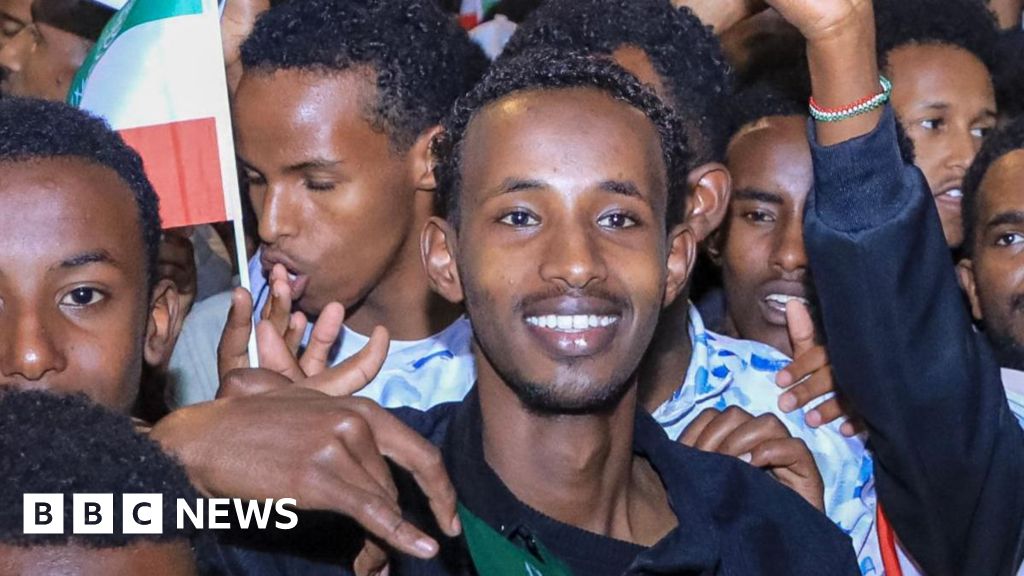
Israel has become the first country on earth to formally recognise Somaliland as a sovereign independent state, a decision announced on Friday that has drawn swift condemnation from a broad coalition of governments and exposed raw divisions over sovereignty, self-determination and control of the Red Sea corridor.
The declaration came more than three decades after the territory in the Horn of Africa cut ties with Somalia. In Hargeisa, the capital of Somaliland, it was received as a historic breakthrough. In Mogadishu, it was treated as an assault on national unity. Within hours, Turkey, Saudi Arabia, Egypt, Qatar, Iran, Iraq, Nigeria, Libya, Sudan, Yemen and the African Union had all registered their opposition, with many framing their objections around Somalia’s territorial integrity.
What Israel actually agreed to
Somaliland’s president, Abdirahman Mohamed Abdullahi, described the development as a historic moment for his people. Israeli Prime Minister Benjamin Netanyahu reinforced the point in a phone call with Abdullahi on Friday, saying his government was acknowledging Somaliland’s right of self-determination and describing formal recognition as a great opportunity for expanding the two countries’ partnership.
Israel has pledged to cooperate with Somaliland across agriculture, health, technology and the economy. Israel’s deputy ambassador to the United Nations, Jonathan Miller, told an emergency session of the Security Council that the move was not a hostile step toward Somalia, nor did it preclude future dialogue between the parties. Recognition, he insisted, is not an act of defiance but an opportunity.
Somalia’s furious response and a widening chorus of dissent
Somalia rejected the declaration outright, calling it an attack on its sovereignty. Somali President Hassan Sheikh Mohamud has characterised the Israeli announcement as an existential threat to his country’s unity, and on Sunday he told his parliament that Somalia would never accept the people of Palestine being forcibly evicted from their rightful land to a faraway place.
China added its voice most recently. Foreign ministry spokesperson Lin Jian told reporters that no country should encourage or support other countries’ internal separatist forces for its own selfish interests, a formulation that echoed the language used by several Arab and African capitals.
A divided Security Council
The United States broke ranks with the majority at an emergency Security Council session convened to discuss the issue, defending Israel’s decision by drawing a comparison with the recognition of Palestinian statehood by several UN member states earlier in the year.
The US deputy ambassador to the UN, Tammy Bruce, said that several countries, including members of the council, had made the unilateral decision to recognise a non-existent Palestinian state, and yet no emergency meeting was called to express the council’s outrage. Washington has consistently opposed those recognitions, and its argument on Friday amounted to a charge of selective indignation.
The session underscored how far the question of unilateral recognition has become a battleground in the wider Israeli-Palestinian dispute, with each camp accusing the other of applying inconsistent standards.
The strategic logic: the Red Sea, the Houthis and Iran
Analysts say the timing has as much to do with geography and security as with principle. Israeli think tank the Institute for National Security Studies argued last month that Israel requires allies in the Red Sea region for many strategic reasons, among them the possibility of a future campaign against the Houthis, the Iran-backed rebels in Yemen. Somaliland, the paper concluded, is an ideal candidate for such cooperation because it could offer Israel potential access to an operational area close to the conflict zone.
Israel repeatedly struck targets in Yemen after the Gaza war erupted in October 2023, retaliating for Houthi attacks that the rebels said were carried out in solidarity with Palestinians in the Gaza Strip.
The recognition also lands at a moment of intense regional diplomacy, with Tehran’s ceasefire diplomacy running alongside Israel’s push for new Red Sea alliances. US-based Africa analyst Cameron Hudson told the BBC that Israel’s primary motive is countering Iranian influence, noting that the Red Sea serves as a conduit for weapons and fighters flowing north toward the Eastern Mediterranean and has traditionally supplied fighters in Gaza. Maintaining a security and intelligence presence at the mouth of the Red Sea, he argued, directly serves Israeli national security interests.
The Houthis responded with a warning that any Israeli presence on Somaliland soil would be treated as a military target for their forces.
Did Gaza displacement play a role?
Speculation about a link to Palestinian displacement has complicated the picture further. Several months ago, news outlets reported that Israel had contacted Somaliland about the potential resettlement of Palestinians forcibly removed from Gaza. Israel did not comment on those reports, and Somaliland at the time said any Israeli move to recognise its independence would have nothing to do with the Palestinian question.
Both Somalia and the Palestinian Authority have nonetheless suggested the recognition could be tied to a plan to relocate Palestinians. The allegation has become a central strand of the opposition argument, giving Arab and Muslim-majority governments a potent rhetorical weapon beyond the narrow question of Somaliland’s status.
Who has stayed silent, and why
Countries regarded as sympathetic to Somaliland’s long campaign for recognition have largely kept their counsel. The United Arab Emirates, which operates a military port in Somaliland, has issued no statement. Hudson said the UAE is very much aligned with the Israelis on the Somaliland question, adding that an alignment of Israeli and Emirati interests across the entire Red Sea region is now plainly visible.
Ethiopia has also refrained from comment. Last year, Somaliland agreed to lease part of its coastline to landlocked Ethiopia, a deal that infuriated Mogadishu. Turkey subsequently mediated between Somalia and Ethiopia, leading Addis Ababa to sign an agreement with Somalia’s government committing it to respect Somali territorial integrity. UK-based Horn of Africa analyst Abdurahman Sayed said that although Israel’s unilateral recognition may be quietly welcomed in Ethiopia, Addis Ababa appears to have adopted a cautious wait-and-see approach.
Why the African Union is alarmed
The African Union has long worried that recognising Somaliland could set off a chain reaction, emboldening separatist movements elsewhere on the continent to demand recognition for territories they claim. Sayed warned that regions could attempt to establish external alliances without the consent of central governments, creating a dangerous precedent that risks widespread instability.
That concern explains why the AU’s objection has been among the sharpest, and why several African governments that have no direct stake in the Horn of Africa have nonetheless joined the condemnations.
Washington, Brussels and London hold back
Somalilanders had hoped the United States would follow suit after signals sent before Donald Trump began his second term as president. Those hopes were dashed when Trump indicated to the New York Post that he would not rush to emulate Netanyahu, reportedly asking whether anyone really knows what Somaliland is.
The European Union and the United Kingdom have also declined to recognise Somaliland’s independence, stating that they support Somalia’s territorial integrity.
A territory with its own institutions
Somaliland is a semi-desert territory on the coast of the Gulf of Aden, home to roughly six million people. It declared independence in 1991 after the overthrow of Somali military dictator Siad Barre, following a secessionist struggle during which government forces pursued rebel guerrillas across the territory, tens of thousands of people were killed and towns were flattened.
Although it lacks international recognition, Somaliland operates a functioning political system, government institutions, a police force and its own currency. Its separate history dates to nineteenth century colonial rule, when it was a British protectorate known as British Somaliland until it merged with Italian Somaliland in 1960 to create the Somali Republic.
Supporters of independence point to the region’s relative peace and stability and argue it should not be shackled to a Somalia long wracked by Islamist militant attacks. The Isaaq clan forms the bulk of the population, a demographic feature that proponents once cited as a distinguishing factor, although the BBC later amended its own reporting to remove a suggestion that the clan is ethnically different from other Somalis, a characterisation it acknowledged was inaccurate.
Mogadishu’s position remains unchanged: Somaliland is an integral part of Somalia, and any recognition of its independence contravenes Somali sovereignty. How far Israel’s precedent travels will depend on whether other capitals decide the strategic value of a Red Sea foothold outweighs the diplomatic cost of defying the African Union.
Source Reference (bbc.com): Why Israel’s recognition of Somaliland as an independent state is controversial
