Poland’s Nawrocki Makes Historic First Visit to Manila
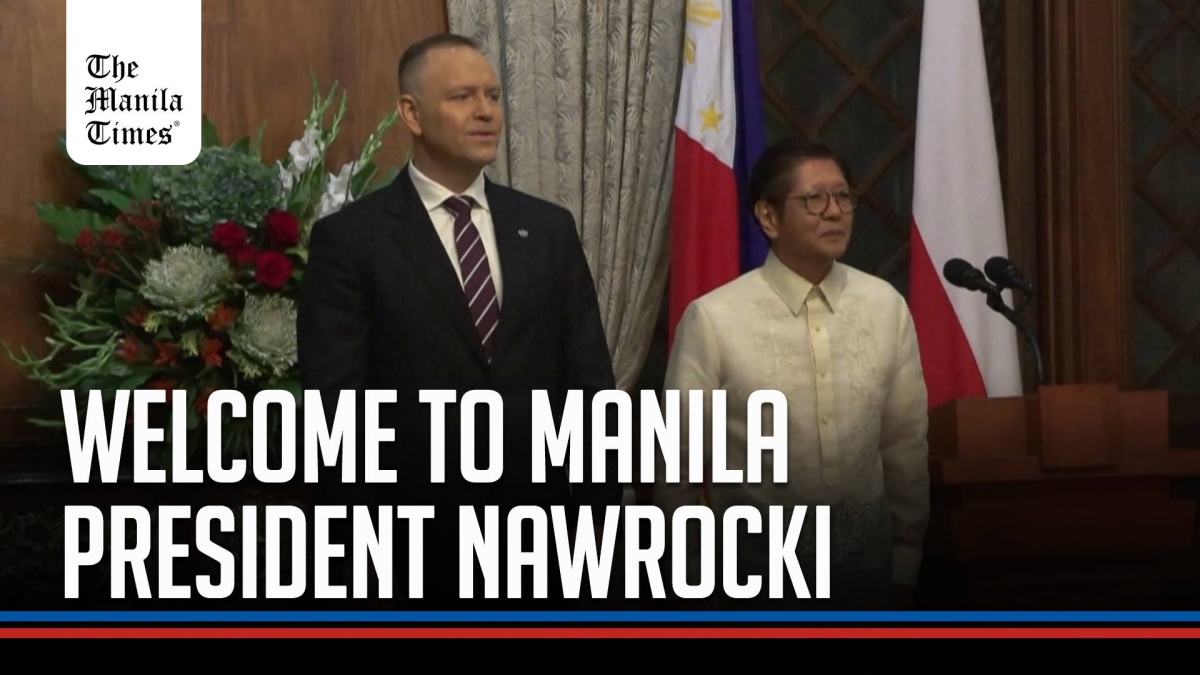
Poland’s president Karol Nawrocki sat down with Philippine President Ferdinand Marcos Jr. in Manila on 7 October, becoming the first Polish head of state ever to set foot in the archipelago. The meeting, filmed by AFPTV’s Faith Brown and published by The Manila Times, concluded with the two governments signing a mutual legal assistance agreement in criminal matters, and it opened a broad conversation covering defence and security, trade and industry.
The symbolism travels well beyond the signing table. Warsaw has spent recent years widening its political and commercial footprint across Asia, and Manila ranks among the region’s most consequential partners: a treaty ally of the United States, a fast-expanding economy of more than 110 million people, and a frontline state in the disputed waters of the South China Sea. For a Polish presidency still inside its first year, the trip delivers a photograph of reach that stretches far past Europe.
A First in More Than Half a Century of Ties
Formal relations between Poland and the Philippines stretch back to the early 1970s, yet for five decades the relationship ran on modest trade, development assistance and the quiet labour of embassies. No Polish president had made the journey. Nawrocki’s arrival resets that calendar. It converts a working relationship into a presidential one, a distinction that carries weight in capitals where protocol is read as intent.
Poland has its own reasons for the journey. As a European Union and NATO member with a sizeable and increasingly export-minded defence industry, it wants a louder voice in Indo-Pacific conversations and is cultivating partners across Southeast Asia. The Philippines, which is due to take the chair of ASEAN in 2026, offers an obvious entry point and a government that is actively shopping for friends beyond its traditional allies.
The Legal Agreement at the Core of the Visit
The mutual legal assistance treaty in criminal matters is the concrete deliverable of the visit. Such agreements give prosecutors a formal channel to request evidence, freeze and recover assets, interview witnesses and trace money across borders. They are unglamorous instruments, but they decide how quickly investigators can move when a case crosses continents.
The practical caseload is not hypothetical. Transnational fraud operations, cyber-enabled scams, drug trafficking and the exploitation of migrant workers all involve evidence held in more than one jurisdiction. The Philippines is one of the world’s largest sources of seafarers and overseas workers, while Poland sits on the European Union’s external border and carries Schengen responsibilities. Both governments face versions of these problems, and both have an interest in making requests for help enforceable rather than merely polite.
What ratification will involve
Signing is the beginning, not the end. In the Philippines, treaties of this kind generally require the concurrence of the Senate, and the Polish side must complete its own domestic procedures. Officials in both capitals will now be watching for the instrument to clear those hurdles, because the value of the agreement sits entirely in its operability.
Defence, Security and the Industrial Dimension
Defence and security formed the second pillar of the discussion, and it is the area where Warsaw brings something concrete to the table. Poland devotes a larger share of its output to defence than any other NATO member, and its domestic industry has scaled up production of unmanned systems, ammunition, small arms and armoured platforms. For a Philippine military pursuing its modernisation programme, that catalogue is relevant, and so is the political appeal of a supplier that is not entangled in the region’s great-power rivalries.
Marcos has pushed the armed forces toward a more credible external defence posture, moving resources away from internal counterinsurgency and toward maritime domain awareness, coastal defence and air capability. Any Polish contribution would most likely be niche rather than transformative, but niche capabilities such as drones, counter-drone systems and munitions are precisely what Manila has found difficult to acquire quickly. The talks did not produce a published procurement deal, and none should be assumed, but the conversation places Poland on a shortlist of European suppliers worth a second meeting.
Trade, Industry and a European Gateway
Commercial ties remain small relative to the size of both economies. Two-way trade runs through machinery, electronics and food, with Philippine semiconductor and electronics exports meeting Polish demand for components and consumer goods. The numbers are modest when set against the Philippines’ trade with Germany or the Netherlands, which is exactly why both governments describe the relationship as having room to grow.
Industry cooperation was raised as a companion to trade, covering manufacturing, processing and the transfer of technology rather than pure export. Poland can also argue a case in Brussels. The European Union and the Philippines have revived talks on a free trade agreement, and a member state that has just sent its president to Manila is better placed to push that file up the agenda in Brussels.
A Historian Who Reached the Presidency
Nawrocki’s route to the palace is unusual. Born in Gdańsk in 1983, he trained as a historian, competed as a boxer and went on to run the Museum of the Second World War before leading the Institute of National Remembrance from 2021. He won the presidency in June 2025 by a narrow margin over Rafał Trzaskowski and took office that August, succeeding Andrzej Duda.
His domestic agenda has been consumed by disputes over judicial reform, historical memory and wartime reparations claims against Germany. A state visit to Southeast Asia gives him a portfolio item that is uncontested at home, and it signals that his foreign policy will not be confined to the European neighbourhood.
Manila’s Wider Balancing Act
For Marcos, the value lies in optionality. His foreign policy has leaned firmly toward Washington, expanding military access arrangements and deepening coast guard cooperation, while managing repeated confrontations with Chinese vessels in the West Philippine Sea. Adding a European partner costs little and demonstrates that Manila’s diplomacy is not reducible to a single alliance.
The timing matters as well. With the ASEAN chairmanship approaching, the Philippines needs a record of engagement beyond the region’s immediate disputes. A European presidential visit, even one without a headline-grabbing contract, fits that requirement neatly.
Coverage and a Crowded News Cycle
The visit landed in a busy week of international news, and the footage circulated widely. Diplomatic arrivals in Manila routinely share airtime with the wall-to-wall sports programming that dominates Philippine screens, from NBA opening night tripleheader coverage to viewing guides for events such as Dodgers vs Brewers NLDS Game 4. That competition for attention is one reason presidential trips are built around deliverables that can be photographed and named.
What Comes Next
The immediate test is procedural. The legal assistance agreement needs ratification on both sides, and the two foreign ministries will be expected to schedule follow-up meetings before the momentum fades. Business delegations are the likeliest next step, with food processing, electronics and shipbuilding among the sectors where Polish and Philippine firms could realistically trade.
On defence, watch for technical teams rather than announcements. Procurement in Manila moves through a layered process of assessments and bidding, and a first presidential meeting rarely produces a signed contract. What it does produce is a channel, and channels are what the visit was chiefly about: a Polish president in Manila for the first time, an agreement on the table, and two governments that now have each other’s numbers.
Source Reference (manilatimes.net): WATCH: Poland President Karol Nawrocki visits Manila
Frequently Asked Questions (FAQ)
Is this really the first visit by a Polish president to the Philippines?
Yes. According to the report published by The Manila Times, Karol Nawrocki's trip marked the first time a Polish president has visited the Southeast Asian country, despite diplomatic relations dating back to the early 1970s.
What agreement did Poland and the Philippines sign?
The two governments signed a mutual legal assistance agreement in criminal matters, which creates a formal channel for prosecutors to request evidence, freeze assets and cooperate on cross-border criminal cases.
What other topics were discussed during the meeting?
Beyond the legal assistance pact, Marcos and Nawrocki discussed cooperation in defence and security, trade and industry, according to the account of the visit.
Who is Karol Nawrocki?
Nawrocki is a Polish historian born in Gdańsk in 1983. He directed the Museum of the Second World War and later led the Institute of National Remembrance before winning the 2025 presidential election and taking office in August 2025, succeeding Andrzej Duda.
Who filmed the coverage of the Manila visit?
The video was shot by Faith Brown for AFPTV, the video service of Agence France-Presse, and published by The Manila Times.
{“@context”:”https://schema.org”,”@type”:”FAQPage”,”mainEntity”:[{“@type”:”Question”,”name”:”Is this really the first visit by a Polish president to the Philippines?”,”acceptedAnswer”:{“@type”:”Answer”,”text”:”Yes. According to the report published by The Manila Times, Karol Nawrocki’s trip marked the first time a Polish president has visited the Southeast Asian country, despite diplomatic relations dating back to the early 1970s.”}},{“@type”:”Question”,”name”:”What agreement did Poland and the Philippines sign?”,”acceptedAnswer”:{“@type”:”Answer”,”text”:”The two governments signed a mutual legal assistance agreement in criminal matters, which creates a formal channel for prosecutors to request evidence, freeze assets and cooperate on cross-border criminal cases.”}},{“@type”:”Question”,”name”:”What other topics were discussed during the meeting?”,”acceptedAnswer”:{“@type”:”Answer”,”text”:”Beyond the legal assistance pact, Marcos and Nawrocki discussed cooperation in defence and security, trade and industry, according to the account of the visit.”}},{“@type”:”Question”,”name”:”Who is Karol Nawrocki?”,”acceptedAnswer”:{“@type”:”Answer”,”text”:”Nawrocki is a Polish historian born in Gdańsk in 1983. He directed the Museum of the Second World War and later led the Institute of National Remembrance before winning the 2025 presidential election and taking office in August 2025, succeeding Andrzej Duda.”}},{“@type”:”Question”,”name”:”Who filmed the coverage of the Manila visit?”,”acceptedAnswer”:{“@type”:”Answer”,”text”:”The video was shot by Faith Brown for AFPTV, the video service of Agence France-Presse, and published by The Manila Times.”}}]}